
Kartarpur Corridor and Guru Nanak Gurpurab 2026: A Sacred Journey of Faith, History and Hope
A sacred connection that reaches beyond borders
Every year, Guru Nanak Gurpurab brings Sikh communities around the world together in prayer, remembrance, gratitude and service. The occasion celebrates the birth of Sri Guru Nanak Dev Ji, the founder of Sikhism and the first of the ten Sikh Gurus, whose teachings continue to inspire people across religions, cultures and national boundaries.
In 2026, Guru Nanak Gurpurab falls on Tuesday, November 24. For millions of devotees, the occasion is an opportunity to reflect on Guru Nanak Dev Ji's message of equality, truthful living, compassion and devotion to the Divine.
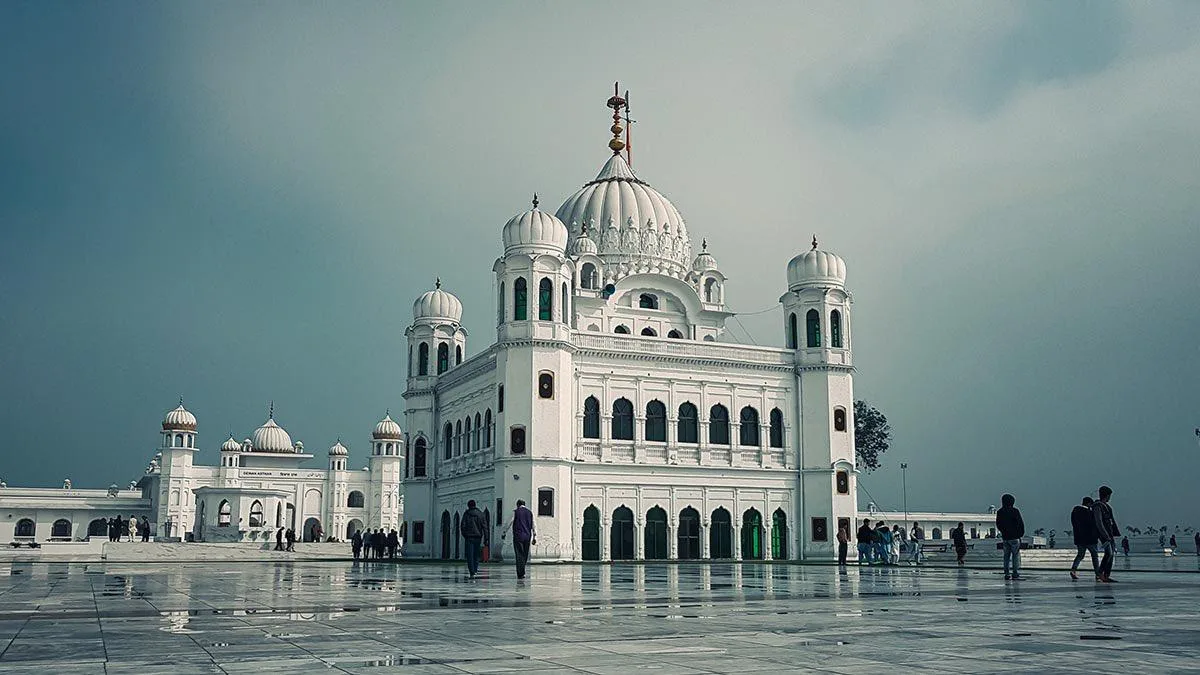
Among the places most closely associated with his life, Gurdwara Sri Darbar Sahib at Kartarpur in Pakistan holds extraordinary significance.
Located near the India–Pakistan border, Kartarpur is where Guru Nanak Dev Ji spent approximately the final eighteen years of his life. It was here that he established a community centered on spiritual devotion, honest work, service and shared meals.
The Kartarpur Corridor, inaugurated in November 2019, created a special route allowing eligible pilgrims from India to visit this sacred shrine without obtaining a conventional Pakistani visa. Its opening fulfilled a longstanding aspiration of devotees who had been separated from the gurdwara by an international border.
However, the approaching Gurpurab in 2026 comes amid a significant restriction: the corridor remains suspended following its closure in May 2025.
Understanding both the spiritual importance of Kartarpur Sahib and the current pilgrimage situation is essential for anyone interested in the 2026 celebrations.
Guru Nanak Gurpurab 2026: Date and significance
Guru Nanak Gurpurab, also widely known as Guru Nanak Jayanti or Prakash Purab, commemorates the birth of Guru Nanak Dev Ji in 1469.
The traditional celebration takes place on Kartik Purnima, the full-moon observance associated with the birth anniversary in the Sikh religious calendar.
For 2026, the date is confirmed as Tuesday, November 24, including in the Government of India's published holiday calendar for Punjab.
Although Guru Nanak Dev Ji's birth anniversary is celebrated in November, historical accounts concerning his precise birth date are not entirely uniform. The Shiromani Gurdwara Parbandhak Committee (SGPC) discusses differing historical dates while recognizing the traditional celebration on Kartik Purnima.
The religious observance is much more than an anniversary on the calendar. It commemorates the life and teachings of a spiritual leader whose message challenged social divisions and emphasized the dignity of human life.
Gurdwaras mark the occasion with devotional singing, scripture readings, prayer, community gatherings and langar, the free community kitchen that serves people without discrimination.
For families, Gurpurab also provides an opportunity to introduce younger generations to Sikh history, Punjabi heritage and the importance of serving others.
What makes Kartarpur Sahib so important?
Kartarpur is situated in Pakistan's Narowal district, near the River Ravi and approximately 4.5 kilometers from the international border with India.
Gurdwara Sri Darbar Sahib, also known as Gurdwara Kartarpur Sahib, marks the place associated with the final chapter of Guru Nanak Dev Ji's earthly life.
Its importance arises not simply from the fact that Guru Nanak lived there, but from the spiritual and community life that developed around him.
According to the SGPC's historical account, Guru Nanak settled at Kartarpur after his extensive travels and remained there until 1539.
At Kartarpur, daily kirtan, or devotional singing, formed an important part of community life. Langar also became a central expression of the values he taught.
Guru Nanak Dev Ji's life at Kartarpur demonstrated that spiritual devotion did not require withdrawal from ordinary responsibilities. Rather, work, family, community participation and service could all form part of a spiritually meaningful life.
This connection between practical living and spiritual principles gives Kartarpur its distinctive place in Sikh history.
Guru Nanak Dev Ji also selected Bhai Lehna Ji, who became Guru Angad Dev Ji, as his successor. This succession continued the spiritual tradition that would develop through the Sikh Gurus.
Guru Nanak Dev Ji passed away in September 1539. Kartarpur has consequently remained one of Sikhism's most revered historical locations.
The gurdwara is a destination of profound religious importance, but the site's meaning extends beyond its architecture. It represents a living connection to the early Sikh community.
Guru Nanak Dev Ji's teachings: The message behind Gurpurab
The significance of Guru Nanak Gurpurab becomes clearer when viewed through the principles associated with his teachings.
The Sikh tradition frequently summarizes the practical foundations of religious life through three interconnected ideas: Naam Japo, Kirat Karo and Vand Chhako.
Naam Japo emphasizes remembrance of the Divine. It encourages a life centered on spiritual awareness and devotion rather than outward ritual alone.
Kirat Karo emphasizes earning one's livelihood through honest work. Guru Nanak Dev Ji's teachings connect spirituality with ethical conduct and personal responsibility.
Vand Chhako encourages sharing what one has with others. This includes food, resources and assistance given in a spirit of generosity and community responsibility.
Together, these principles connect faith with everyday behavior.
Guru Nanak Dev Ji challenged caste-based discrimination and emphasized the dignity of human beings. His teachings also addressed social inequality and the treatment of women.
The institution of langar expresses these values in a particularly visible way. People from different backgrounds are welcomed to share food without distinctions based on caste, wealth or social position.
The practice also emphasizes seva, or selfless service. Volunteers prepare meals, wash utensils, clean spaces, distribute food and perform other necessary tasks.
The point is not merely to provide a meal. Langar demonstrates the belief that every person deserves dignity and hospitality.
These principles remain central to the meaning of Guru Nanak Gurpurab in 2026, just as they have shaped Sikh community life for generations.
Kartarpur Sahib occupies a special place in this history because of its direct association with Guru Nanak Dev Ji's own community.
How Guru Nanak Gurpurab is celebrated
Guru Nanak Gurpurab is observed in gurdwaras throughout India, Pakistan and Sikh communities around the world.
According to the SGPC's description of traditional Gurpurab observances, celebrations commonly include Akhand Path, Nagar Kirtan, devotional singing, prayer, religious discourse and community meals.
An Akhand Path is a continuous reading of Sri Guru Granth Sahib Ji, traditionally conducted over approximately forty-eight hours. Many gurdwaras arrange these readings in connection with important religious occasions.
A Nagar Kirtan is a religious procession during which devotees sing hymns and participate in a public expression of faith. Such processions are traditionally led by the Panj Pyare, the Five Beloved Ones, with Sri Guru Granth Sahib Ji carried in a respectfully arranged palki, or palanquin.
The procession may include kirtan groups, community organizations and displays of Gatka, the traditional Sikh martial art.
On Gurpurab, religious programs commonly begin early in the morning with kirtan and prayers. Congregations gather to listen to Gurbani, reflect on the Guru's teachings and participate in ardas.
Karah Prashad is distributed as part of worship, while langar is served to attendees.
Some gurdwaras continue their devotional programs into the evening.
Specific schedules differ between institutions, and the SGPC's description of traditional practices should not be mistaken for a confirmed program at any particular gurdwara on November 24, 2026.
What connects these observances is their emphasis on devotion, remembrance, service and community participation.
Kartarpur Sahib and the history of Partition
The significance of the Kartarpur Corridor cannot be understood without considering the Partition of British India in 1947.
Partition created the independent countries of India and Pakistan and established an international border through Punjab.
Numerous places important to Sikh history became part of Pakistan, including Gurdwara Sri Darbar Sahib at Kartarpur and Gurdwara Janam Asthan at Nankana Sahib.
Although these sites remained central to Sikh religious identity, visiting them from India required crossing an international border.
Kartarpur presented a particularly striking geographical situation.
The sacred gurdwara stood only a short distance from Indian territory, yet the international boundary separated many devotees from direct access to the site.
For decades, Sikh organizations and devotees advocated easier pilgrimage access.
The demand was rooted in the enduring religious importance of the gurdwara and the desire of worshippers to pay their respects at a place closely connected with Guru Nanak Dev Ji.
The Kartarpur Corridor eventually provided a dedicated crossing between Dera Baba Nanak in India's Gurdaspur district and the Kartarpur shrine in Pakistan.
Its establishment was consequently significant not only as a transport project but also as a development in religious access across the India–Pakistan border.
The opening of the Kartarpur Corridor in November 2019
The Kartarpur Corridor was developed in connection with the worldwide commemoration of Guru Nanak Dev Ji's 550th birth anniversary in 2019.
On November 22, 2018, the Indian government approved development of the corridor on the Indian side of the international border.
The project's foundation stone was laid later that month.
A formal agreement between India and Pakistan was signed on October 24, 2019, establishing the arrangements for pilgrims to visit Gurdwara Darbar Sahib through the new crossing.
The agreement provided a special system of visa-free travel for eligible Indian citizens and Overseas Citizen of India (OCI) cardholders.
This was a significant distinction from ordinary international travel between the two countries.
On November 9, 2019, India's Prime Minister Narendra Modi inaugurated the Integrated Check Post at Dera Baba Nanak and flagged off the first group of pilgrims traveling through the corridor.
The opening coincided with the period of celebrations for Guru Nanak Dev Ji's 550th birth anniversary.
On the Indian side, the project included a four-lane highway of approximately 4.1 kilometers connecting Dera Baba Nanak with the international border, along with a Passenger Terminal Building designed for immigration, customs and security procedures.
The agreement allowed eligible pilgrims to travel for a same-day religious visit rather than requiring an ordinary visit visa for Pakistan.
In this sense, the corridor represented a distinctive arrangement developed specifically around access to a Sikh religious site.
How the corridor was designed to work
Under the arrangements established in 2019, eligible pilgrims could register through India's official Kartarpur Sahib pilgrimage portal.
The system was designed to allow individuals or groups to make a religious visit to Gurdwara Darbar Sahib.
Indian passport holders needed a valid Indian passport. Eligible OCI cardholders needed both their OCI card and a valid passport issued by their country of citizenship.
An approved applicant received an Electronic Travel Authorization, or ETA, which was required for the journey.
Pilgrims traveled through the Passenger Terminal Building at Dera Baba Nanak, where the necessary immigration, customs and security procedures were conducted.
Travel was restricted to the approved visit. Pilgrims were required to return to India on the same day and could not use the corridor to travel elsewhere in Pakistan.
The arrangement was intended for religious pilgrimage, not unrestricted tourism.
Importantly, registration through the Indian government portal was free. However, this should not be confused with Pakistan's historically imposed service charge of US$20 per pilgrim, which was identified in the 2019 bilateral discussions.
The Indian government objected to that charge and requested that Pakistan waive it.
These details describe the original pilgrimage framework, not a currently available travel service. Since the corridor is suspended, travelers should not interpret the historical procedures as permission to make a crossing in 2026.
The corridor's changing status: 2020 to 2025
The Kartarpur Corridor's operation has been interrupted more than once.
On March 16, 2020, travel and registration through the corridor were suspended as part of measures associated with the COVID-19 pandemic.
The closure continued for more than a year.
In November 2021, the Indian government announced that corridor operations would resume beginning November 17, citing the improved COVID-19 situation.
This restoration enabled pilgrimage through the corridor to recommence under the applicable procedures.
Another major development came in October 2024.
The governments of India and Pakistan extended the Kartarpur Corridor agreement for an additional five years. Pakistan's Ministry of Foreign Affairs publicly confirmed the renewal on October 22, 2024.
The extension preserved the bilateral framework established in 2019.
However, an agreement remaining in force does not necessarily mean that the physical crossing is operating.
The distinction became particularly important in 2025.
Following the April 22, 2025 terrorist attack in Pahalgam and the subsequent escalation in India–Pakistan tensions, the Kartarpur Corridor's services were suspended with effect from May 7, 2025.
The Indian government cited the security situation in explaining why the corridor could not resume operations.
The suspension has continued into 2026.
Kartarpur Corridor status for Guru Nanak Gurpurab 2026
With Guru Nanak Gurpurab approaching, one of the most important questions for devotees is whether the Kartarpur Corridor will reopen in time for the celebrations.
As of November 4, 2026, the corridor remains suspended.
India's Ministry of Home Affairs continues to display an official notice stating that services of the Sri Kartarpur Sahib Corridor are suspended until further directions because of the prevailing security situation.
The government reiterated its position in Parliament on July 31, 2026, acknowledging requests from Sikh religious organizations for an early reopening but maintaining that the security situation prevented resumption.
The demand for reopening has remained active.
In October 2026, the Punjab Legislative Assembly passed a resolution urging India's central government to take steps to reopen the corridor and facilitate safe religious access.
The resolution also called for simplified procedures and diplomatic engagement to support pilgrimage.
These developments demonstrate continued public and institutional interest in restoring the crossing.
Nevertheless, a resolution requesting reopening is not an authorization to reopen.
No confirmed reopening date was identified in the official Indian government information reviewed for this article.
For visitors considering a journey during Gurpurab, the practical implication is clear: the Kartarpur Corridor should not be treated as an available border crossing unless the responsible authorities formally announce that services have resumed.
Guru Nanak Gurpurab 2026 celebrations in Pakistan
Although the Kartarpur Corridor remains suspended, preparations for Guru Nanak Gurpurab celebrations in Pakistan have been announced separately.
On October 15, 2026, Pakistan's Evacuee Trust Property Board (ETPB), which is involved in administering important religious properties and shrines, reported a high-level coordination meeting concerning the 557th birth anniversary of Guru Nanak Dev Ji.
The meeting involved officials from multiple agencies, including security, customs, immigration, foreign affairs and local administrative departments.
According to the ETPB's announcement, arrangements under review included accommodation, langar, transportation, medical services, drinking water, electricity and security for visiting pilgrims.
The ETPB also announced plans for Sikh pilgrims to arrive through the Wagah border on November 22, 2026, with the main birth anniversary ceremony scheduled for November 24 at Nankana Sahib.
These are announced plans as of the date of this article. They should not be presented as completed events or as proof that border entry has been authorized for every intending pilgrim.
Nankana Sahib is particularly important because it is Guru Nanak Dev Ji's birthplace.
Gurdwara Janam Asthan at Nankana Sahib and Gurdwara Darbar Sahib at Kartarpur commemorate different periods of Guru Nanak Dev Ji's life.
The first is associated with his birth; the second with his later years and the community established at Kartarpur.
Both are sacred places, but they should not be confused.
Crucially, Pakistan's preparations for ceremonies at Nankana Sahib do not amount to an announcement that the separate Kartarpur Corridor has reopened.
Demand for pilgrimage visas ahead of Gurpurab 2026
The approaching anniversary has also highlighted the significant demand among Indian Sikh devotees seeking to visit historic gurdwaras in Pakistan.
In August 2026, the SGPC reported receiving more than 7,500 passports from devotees interested in traveling to Pakistan for Guru Nanak Dev Ji's birth anniversary celebrations.
The SGPC requested that Pakistani authorities increase the number of pilgrimage visas issued, particularly because the usual allocation would not accommodate every applicant.
This was a request for additional visa approvals, not confirmation that all applicants had been granted permission.
The SGPC has traditionally facilitated organized pilgrim groups, known as jathas, traveling to religious sites in Pakistan under bilateral arrangements.
These journeys are separate from the visa-free Kartarpur Corridor system.
The distinction matters because a pilgrimage to Nankana Sahib under an approved visa arrangement and a same-day visit to Kartarpur through the corridor are not interchangeable travel options.
Different entry documents, permissions, routes and administrative procedures apply.
Applicants seeking to participate in organized religious pilgrimages must therefore follow the instructions issued by the relevant organizers and government authorities.
The documented demand for pilgrimage places in 2026 also underscores the continuing importance of access to Sikh heritage sites across the international border.
Planning a Kartarpur Sahib visit: What travelers should understand
For families and devotees interested in visiting Kartarpur Sahib, accurate information is especially important because the pilgrimage involves an international boundary.
The most important first step is to confirm whether the corridor is operating.
India's Ministry of Home Affairs maintains the official Kartarpur Sahib pilgrimage portal at https://prakashpurb550.mha.gov.in/.
The portal remains an important source for formal announcements and pilgrimage procedures.
However, historical registration instructions on the website do not override its current suspension notice.
If the corridor is reopened in the future, prospective pilgrims should review the requirements published for the specific date of travel.
Under the original arrangements, the corridor's travel eligibility was tied to Indian passports and eligible OCI cardholders. The system should not be interpreted as a general visa-free entry option for all foreign passport holders.
For an OCI cardholder, the original published procedure required both a valid foreign passport and an OCI card.
The 2019 arrangements also required advance authorization, same-day return and compliance with baggage and security restrictions.
Those requirements may be reviewed or revised by the responsible authorities whenever operations resume.
Travelers should also distinguish between permission to cross the border and permission to enter the shrine under a different travel arrangement.
An approved Pakistani visa for a separate pilgrimage does not automatically authorize use of the suspended corridor.
Likewise, a religious celebration being scheduled in Pakistan does not establish that a particular border crossing is open.
Before committing money to travel or accommodation on the assumption of access to Pakistan, travelers should obtain confirmation from the appropriate government and pilgrimage authorities.
Dera Baba Nanak: The Indian side of the sacred connection
Dera Baba Nanak, in Punjab's Gurdaspur district, is the Indian-side location associated with the Kartarpur Corridor.
According to the Ministry of Home Affairs, Dera Baba Nanak is approximately 45 kilometers from Amritsar by the route identified on its official pilgrimage portal.
The town has historical importance in Sikh tradition and is closely connected with the geographical setting of the corridor.
Gurdwara Dera Baba Nanak stands on the Indian side of the River Ravi, while Kartarpur Sahib is situated across the international boundary in Pakistan.
This geography helps explain why the corridor attracted so much attention when it opened in 2019.
Two sites connected through Sikh religious history had become separated by an international border, despite their relative geographical proximity.
For travelers exploring Punjab's religious heritage, learning about Dera Baba Nanak and Kartarpur provides important historical context.
However, visiting Dera Baba Nanak in India is not the same as crossing the international boundary into Kartarpur.
Any restrictions around the border, viewing areas, security installations or passenger terminal must be respected. Access should never be assumed merely because a place is visible on a map.
Current local access arrangements should be verified before a journey.
Why the reopening of Kartarpur Sahib remains significant
For Sikh devotees, the corridor represents more than an international crossing.
It provides a direct connection to a place closely associated with Guru Nanak Dev Ji's teachings, the founding Sikh community and the development of religious practices that continue today.
Its suspension has consequently attracted concern from religious organizations and elected representatives.
In 2026, requests for reopening have emphasized the need to preserve access to the shrine while addressing security considerations.
The Indian government's stated position has centered on the prevailing security environment.
Sikh organizations have emphasized the religious importance of restoring access.
These are distinct concerns that have shaped public discussion about the corridor.
It is possible to recognize both the government's responsibility for border security and the importance that devotees attach to their places of worship without making unsupported claims about when conditions will change.
The Kartarpur Corridor's history demonstrates that religious access can depend on bilateral agreements, infrastructure, immigration arrangements and political circumstances.
Its future operation will similarly depend on decisions made by the responsible authorities.
For now, the significance of Kartarpur Sahib itself remains unchanged.
The religious history associated with the shrine is not dependent on whether a particular route is open on a particular day.
Celebrating Guru Nanak Gurpurab when travel is not possible
Guru Nanak Gurpurab does not require an international journey to be meaningful.
The traditional observances described by the SGPC offer several ways for devotees to participate through their own communities.
Attending a local gurdwara, listening to kirtan, taking part in prayer, reading Gurbani and participating in langar are all established expressions of the occasion.
Seva also provides a practical connection to Guru Nanak Dev Ji's message.
Helping prepare or distribute food, supporting community service and treating others with dignity reflect the principles that remain central to Sikh life.
Families may also use the occasion to learn about places associated with Guru Nanak Dev Ji, including Nankana Sahib, Sultanpur Lodhi and Kartarpur.
Understanding the historical importance of these locations can deepen appreciation of the Guru's life, even when travel is not possible.
For younger generations, learning why the corridor matters can also introduce important aspects of Punjab's history, Partition and the continued connection between religious communities and sacred places across borders.
The central message remains one of remembrance, honest living, generosity and service.
Frequently asked questions about Kartarpur Corridor and Gurpurab 2026
When is Guru Nanak Gurpurab in 2026?
Guru Nanak Gurpurab falls on Tuesday, November 24, 2026. The date is confirmed in the Government of India's 2026 holiday calendar.
Is the Kartarpur Corridor open for Gurpurab 2026?
As of November 4, 2026, India's Ministry of Home Affairs lists the Kartarpur Corridor as suspended until further directions. No confirmed reopening date was established by the official sources reviewed.
Is Kartarpur Sahib the birthplace of Guru Nanak Dev Ji?
No. Guru Nanak Dev Ji was born at Rai Bhoi di Talwandi, now known as Nankana Sahib in Pakistan. Kartarpur is associated with approximately the final eighteen years of his life.
When did the Kartarpur Corridor first open?
The corridor was inaugurated on November 9, 2019, in connection with the commemorations of Guru Nanak Dev Ji's 550th birth anniversary.
Did the Kartarpur Corridor agreement expire?
No. The bilateral agreement was extended for another five years in October 2024. However, the agreement's continuation does not mean that corridor services are currently operating.
Can OCI cardholders use the Kartarpur Corridor?
Under the original arrangements, eligible OCI cardholders could travel with a valid passport and OCI card after obtaining the necessary authorization. Because the corridor is suspended, these historical requirements do not currently provide permission to cross.
Is visiting Nankana Sahib the same as visiting Kartarpur Sahib?
No. Nankana Sahib is associated with Guru Nanak Dev Ji's birth, while Kartarpur Sahib commemorates his later life. The sites are separate destinations, and their travel arrangements are different.
Are Guru Nanak Gurpurab events planned in Pakistan for 2026?
Yes. Pakistan's Evacuee Trust Property Board announced preparations for the November 24 celebration at Nankana Sahib. Individual travel eligibility, visas and border-crossing arrangements still require confirmation.
Guru Nanak Gurpurab 2026: A message that endures
As November 24, 2026 approaches, Guru Nanak Gurpurab offers an opportunity to reflect on the teachings of one of the most influential figures in Punjab's religious and cultural history.
Guru Nanak Dev Ji's message emphasized devotion, honest work, equality, compassion and service to humanity.
Kartarpur Sahib remains a powerful reminder of those teachings because it is associated with the community he established and the final years of his life.
The opening of the Kartarpur Corridor in 2019 gave eligible devotees a special means of visiting the sacred gurdwara across the India–Pakistan border.
Its continued suspension in 2026 has revived questions about religious access, security and the future of this important pilgrimage route.
While there is no confirmed reopening date, the spiritual significance of Kartarpur Sahib continues to transcend the limitations of a border crossing.
For devotees gathering at gurdwaras, participating in langar or remembering the Guru's teachings at home, the essential meaning of Gurpurab remains rooted in the values Guru Nanak Dev Ji shared.
On Guru Nanak Gurpurab 2026, the message of truthful living, equality and selfless service remains as relevant as ever.
Ghulatis On The Go wishes everyone celebrating a peaceful and meaningful Guru Nanak Gurpurab.
Waheguru Ji Ka Khalsa, Waheguru Ji Ki Fateh.
Continue exploring
Related guides, articles, and videos
These recommendations are matched to this Blog using its destinations, routes, vehicles, and practical travel topics.
Recommended travel guide
Family Travel Tips
Simple family-focused advice for safer, calmer, and more enjoyable trips with kids, luggage, snacks, comfort breaks, and flexible planning.
Open this topic guideRelated reading