

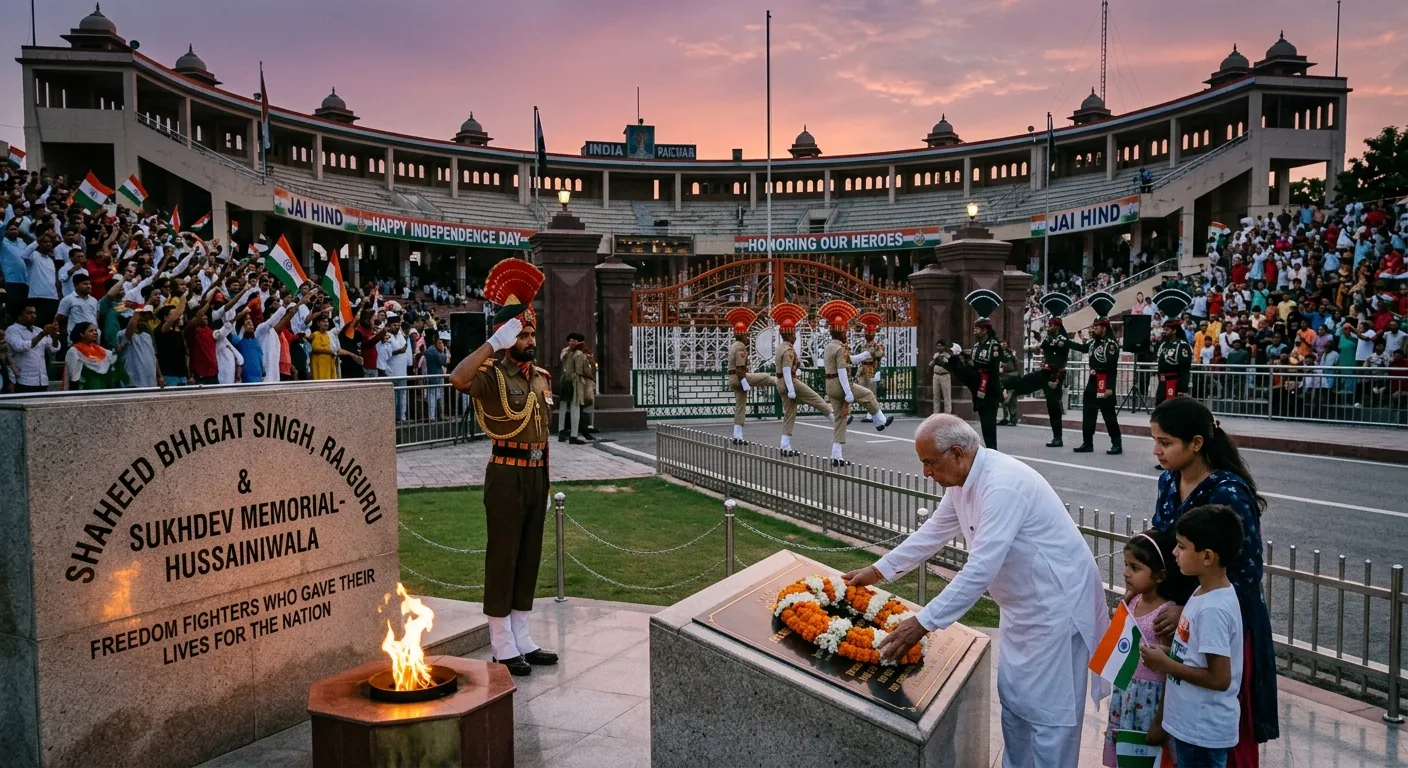
A Journey to Hussainiwala: Celebrating Independence Day
The Ghulatis On The Go family embarks on a special journey to Hussainiwala, Punjab, to celebrate Independence Day. The video captures their road trip, highlighting the scenic routes and significant historical sites along the way. Their primary destination is the Hussainiwala Border, where they plan to witness the Beating Retreat ceremony, a display of patriotism and military precision. This trip is not just about the ceremony; it's also an opportunity to pay homage to India's freedom fighters at the National Martyrs Memorial and explore the historic Hussainiwala Railway Station.
The journey begins on a pleasant morning, with the family expressing their excitement for the day's events. The drive takes them through lush green landscapes, offering glimpses of rural Punjab. The roads appear well-maintained, allowing for a smooth and enjoyable ride. As they approach Firozpur, the anticipation builds, knowing they are nearing a place steeped in history and national pride. The family's enthusiasm is palpable, setting a patriotic tone for the entire vlog.
Crossing the Sutlej Barrage and Approaching the Border
The drive continues towards the Hussainiwala Border, leading the family across a significant landmark: the Sutlej Barrage. This large bridge, spanning the Sutlej River, is a testament to engineering and a crucial part of the region's infrastructure. The views from the bridge offer a wide expanse of water and the surrounding landscape, providing a moment of reflection on the river's historical importance. The narrator mentions that the area beyond Firozpur is close to the Hussainiwala Border, emphasizing the proximity to the international boundary.
Upon crossing the barrage, the road becomes a bit more rustic, with a mix of paved and unpaved sections. They pass by a long, corrugated metal wall on one side and the barrage's structure on the other, indicating a controlled and sensitive area. The presence of other vehicles, including motorcycles and bicycles, suggests that this route is regularly used by locals. The journey through this section provides a sense of the border region's unique environment, blending natural beauty with strategic infrastructure.
Hussainiwala National Martyrs Memorial
Before reaching the border ceremony, the Ghulatis On The Go family makes a poignant stop at the Hussainiwala National Martyrs Memorial. This memorial commemorates the sacrifices of Indian soldiers during the 1965 and 1971 India-Pakistan wars. The entrance to the memorial is marked by a sign welcoming visitors to Hussainiwala Border, approximately 1 kilometer away. The path leading to the memorial is lined with tall trees, creating a serene and respectful atmosphere.
The memorial complex features several pillars with plaques detailing the battles and listing the names of gallantry award recipients and martyrs. One prominent section is dedicated to Shaheed Bhagat Singh, Shaheed Shivaram Hari Rajguru, and Shaheed Sukhdev Thapar, three legendary freedom fighters. Their busts are displayed, and a plaque, known as "Prerna Sthal" (Place of Inspiration), commemorates their ultimate sacrifice. The narrator explains that these revolutionaries were secretly cremated here by the British on March 23, 1931, after villagers prevented their bodies from being disposed of elsewhere. The memorial also includes maps illustrating the battle of Hussainiwala Bridge in 1956 and other conflicts, providing historical context to the site. The entire area is well-maintained, with green lawns and paved walkways, offering a solemn space for remembrance.
The Historic Hussainiwala Railway Station
Adjacent to the Martyrs Memorial is the historic Hussainiwala Railway Station, now preserved as a museum and memorial. The station building, constructed in 1887, is known as the "Building Kesar-E-Hind." It served as a dual bridge for both railways and roadways, facilitating operational movement. The building itself bears the scars of bullets fired during the 1965 and 1971 wars, a stark reminder of the intense conflicts that took place here. The narrator highlights that the 15th Punjab Regiment bravely defended this strategic location against Pakistani tanks.
Inside the station, a virtual train journey experience is offered, showcasing the real train that ran during the pre-independence era from Peshawar to Firozpur. The family enters a train cabin, which is air-conditioned and features screens in place of windows, displaying a simulated journey. This immersive experience allows visitors to appreciate the historical significance of the railway and the region's cultural heritage. The narrator also mentions that the original railway bridge was destroyed by the Indian Army during the 1971 war to prevent Pakistani movement, and a new bridge has since been constructed for a light and sound show, though no trains currently operate on it.
The Beating Retreat Ceremony at Hussainiwala Border
The highlight of the trip is the Beating Retreat ceremony at the Hussainiwala Joint Check Post (JCP) of the Border Security Force (BSF). The family arrives at the border post, marked by a grand archway proclaiming "Welcome to the Land of Martyrs." The area is bustling with visitors, including many schoolchildren, all eager to witness the patriotic spectacle. The ceremony, typically held between 6:30 PM and 7:00 PM, is a display of military drill and flag-lowering, performed by both Indian BSF and Pakistan Rangers personnel.
The atmosphere is charged with nationalistic fervor, with crowds on both sides of the border cheering and waving their respective flags. The Indian side features a large seating area, packed with enthusiastic spectators. The BSF jawans (soldiers) perform intricate drills, characterized by high kicks and synchronized movements, showcasing their discipline and valor. The narrator emphasizes the immense pride and emotion evoked by the sight of the Indian flag, the Tiranga, fluttering proudly. The ceremony culminates with the synchronized lowering of the flags, a symbolic gesture of mutual respect and the end of the day's proceedings. The event is a powerful reminder of the sacrifices made to protect the nation's borders and the enduring spirit of patriotism.
Practical Takeaways for Travelers
A visit to Hussainiwala Border offers a unique blend of history, patriotism, and cultural experience. For families planning a road trip, the journey provides an educational opportunity to learn about India's freedom struggle and military history. The well-maintained memorials and the historic railway station offer insightful glimpses into the past. It is advisable to check the timings for the Beating Retreat ceremony in advance, as it is a popular event that draws large crowds. Arriving early ensures good seating and a chance to explore the memorials before the ceremony begins. The presence of amenities like parking and souvenir shops at the border post adds to the convenience for visitors. The overall experience is deeply moving, leaving a lasting impression of national pride and respect for the armed forces.
Watch the Original Journey
This article is connected to the original Ghulatis On The Go video below. Watch it for the complete visual experience and conversations from the road.
Key moments from the video
Continue exploring
Related guides, articles, and videos
These recommendations are matched to this Journey Article using its locations, routes, vehicles, categories, and practical travel topics.
Recommended travel guide
India Road Trip Guides
Practical route planning, packing, timing, toll, food-stop, and family comfort guidance for Indian road trips.
Open this topic guideRelated reading