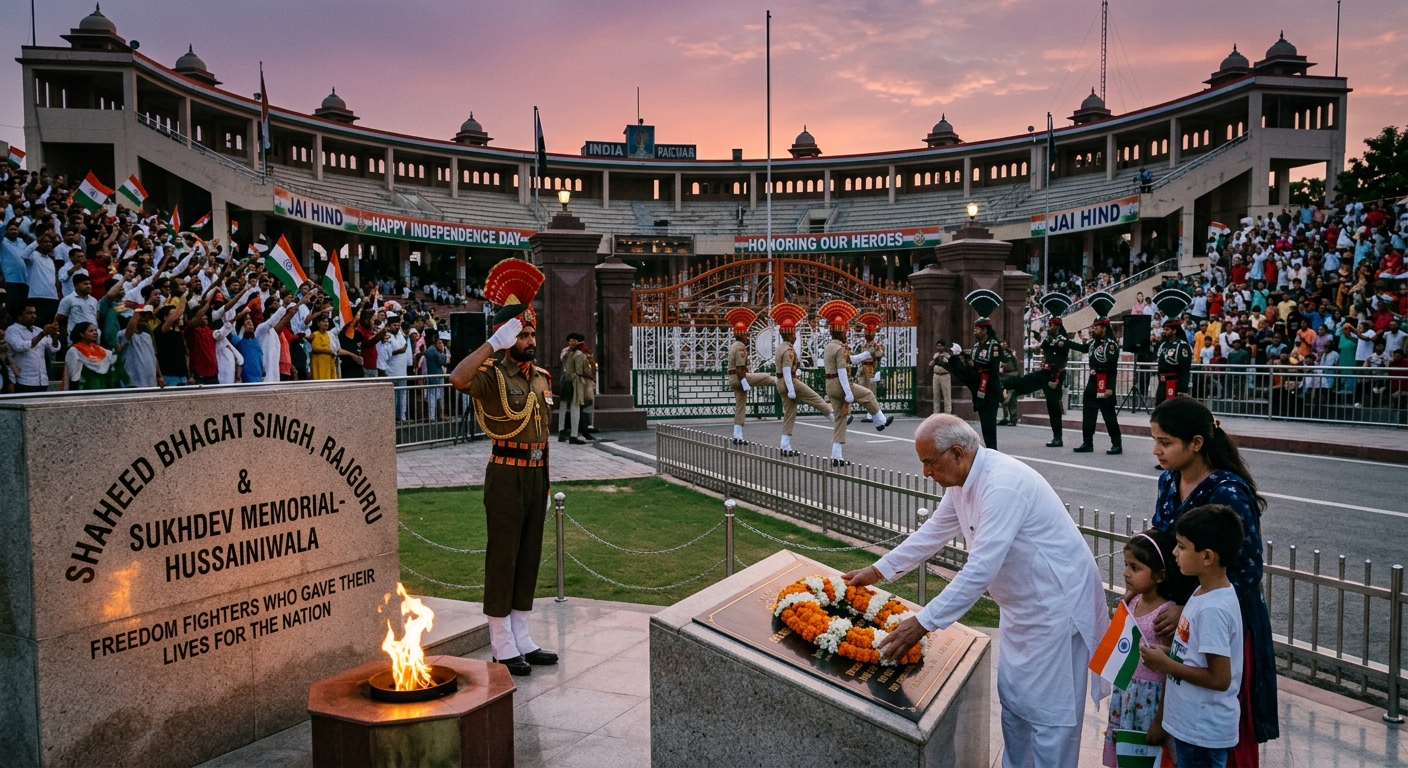

Embarking on a road trip from Jalandhar, the Ghulatis On The Go family set out to explore the historic roads and landscapes of Punjab, with their ultimate destination being the legendary Hussainiwala Railway Station near the India-Pakistan border. The journey, commencing at 2:00 PM, promised a blend of modern highway driving and a deep dive into the region's rich history, particularly its railway heritage.
The initial leg of the journey began on the outskirts of Jalandhar, on Nakodar Road, which is part of NH 703. The road conditions were generally good, offering a smooth start to the trip. Along the way, the family observed the ongoing construction of the Jalandhar Ring Road, noting significant progress since their last visit. This new infrastructure project highlights the continuous development in the region, aiming to improve connectivity and ease traffic flow around the city. After passing through Kang Sabu village, the route bypassed Nakodar city, maintaining a steady pace on the well-maintained six-lane highway.
The primary objective of this road trip was to reach Hussainiwala Railway Station, a site of immense historical significance. This station holds the distinction of being the last railway station of Northern Railways in India, with no further train movement beyond this point. Historically, this route was a vital link, with the Punjab Mail operating from Mumbai all the way to Peshawar, Pakistan, starting in 1885. However, the railway bridge over the Satluj River, known as the Kesre Hind Bridge, was strategically destroyed by the Indian Army during the 1971 Indo-Pak War to prevent Pakistani forces from entering India. This act severed the railway connection, leaving Hussainiwala as the terminal point on the Indian side.
Navigating Towards Moga and Ferozepur
Continuing on NH 703, the family encountered a flyover for Shahkot, with the main highway proceeding towards Moga. The road conditions remained favorable, allowing for a comfortable drive. After crossing the Satluj River, they arrived at a toll barrier. Although the standard toll charge was Rs. 125, the family, possessing an annual pass, only incurred a charge of Rs. 15, highlighting a practical tip for frequent travelers on these routes. The journey progressed, bypassing Dharamkot and eventually leading to Moga. The drive to Moga took approximately one hour and fifteen minutes from Jalandhar, arriving at 3:15 PM. The roads leading into Moga were wide and well-laid out, with a bustling market area offering fresh fruits and other local produce.
From Moga, the route shifted towards Ferozepur. The road to Ferozepur was a two-lane highway, characterized by pleasant greenery and well-maintained surfaces, making for an enjoyable drive. This section of the journey provided a scenic experience, with lush agricultural fields and rows of trees lining the road. The family noted the presence of a food court with branded outlets just before Ferozepur, offering convenient stops for refreshments. This indicates the increasing development of amenities along these highways, catering to the needs of travelers.
Arrival in Ferozepur and the Road to Hussainiwala
Upon entering Ferozepur, which is proudly known as the 'Land of Martyrs,' the family was greeted by a memorial dedicated to Bhagat Singh, Sukhdev, and Rajguru, underscoring the city's deep historical roots and sacrifices made for the nation. The drive through Ferozepur involved navigating several roundabouts, which were well-designed and maintained. The city's outer areas were relatively smooth, but some patches of road within the city showed signs of wear and tear, a common sight in many Indian towns.
The final leg of the journey from Ferozepur to Hussainiwala Railway Station involved a turn onto a link road. This section of the road was under construction, with a new flyover being built over the railway line. The retaining walls for the flyover were largely complete, and earth-filling work was in progress. This construction indicates future improvements to the connectivity of the area. Despite the ongoing work, the road was navigable, leading directly to the historic railway station.
Hussainiwala Railway Station: A Glimpse into History
Arriving at Hussainiwala Railway Station at 4:30 PM, after approximately two hours and thirty minutes of driving from Jalandhar, the family was met with a small, iconic railway building. The station sign, displaying 'Hussainiwala' in Punjabi, Hindi, and English, stood as a silent testament to its past. A ticket window, now closed, and a platform with overgrown tracks further emphasized its disused state. The electrification work on the railway line was evident, a reminder of the two annual occasions when a DMU (Diesel Multiple Unit) train runs from Ferozepur Cantt to Hussainiwala. These special services occur on March 23rd, Shaheedi Divas (Martyrdom Day) of Bhagat Singh, Sukhdev, and Rajguru, and on April 13th, Baisakhi. These trains bring visitors to pay homage at the nearby memorial.
Standing at the end of the railway track, marked with a sign reading 'Beginning of N. Rly.' (Northern Railway), one could almost visualize the Punjab Mail continuing its journey to Lahore and Peshawar. The sight of the old railway bridge over the Satluj River, which was destroyed in 1971, further amplified the historical weight of the location. The entire experience at Hussainiwala Railway Station evoked a strong sense of history and patriotism, making it a truly unique and moving destination.
Practical Takeaways for Travelers
- Route Planning: The journey from Jalandhar to Ferozepur via NH 703 and then NH 5 offers a mix of well-maintained highways and scenic routes.
- Toll Charges: Be aware of toll charges, especially on national highways. An annual pass can significantly reduce costs for frequent travelers.
- Road Conditions: While national highways are generally excellent, be prepared for varying road conditions, including ongoing construction and occasional rough patches, particularly within city limits or on link roads.
- Historical Significance: Punjab is rich in history. Researching destinations like Hussainiwala Railway Station beforehand can enhance the travel experience.
- Food Stops: Modern food courts and local markets are available along the route, providing ample opportunities for meals and snacks.
- Timing: Starting the journey early can help avoid heavy traffic and allow more time for exploration at destinations.
Watch the Original Journey
This article is connected to the original Ghulatis On The Go video below. Watch it for the complete visual experience and conversations from the road.
Key moments from the video
Continue exploring
Related guides, articles, and videos
These recommendations are matched to this Journey Article using its locations, routes, vehicles, categories, and practical travel topics.
Recommended travel guide
India Road Trip Guides
Practical route planning, packing, timing, toll, food-stop, and family comfort guidance for Indian road trips.
Open this topic guideRelated reading