
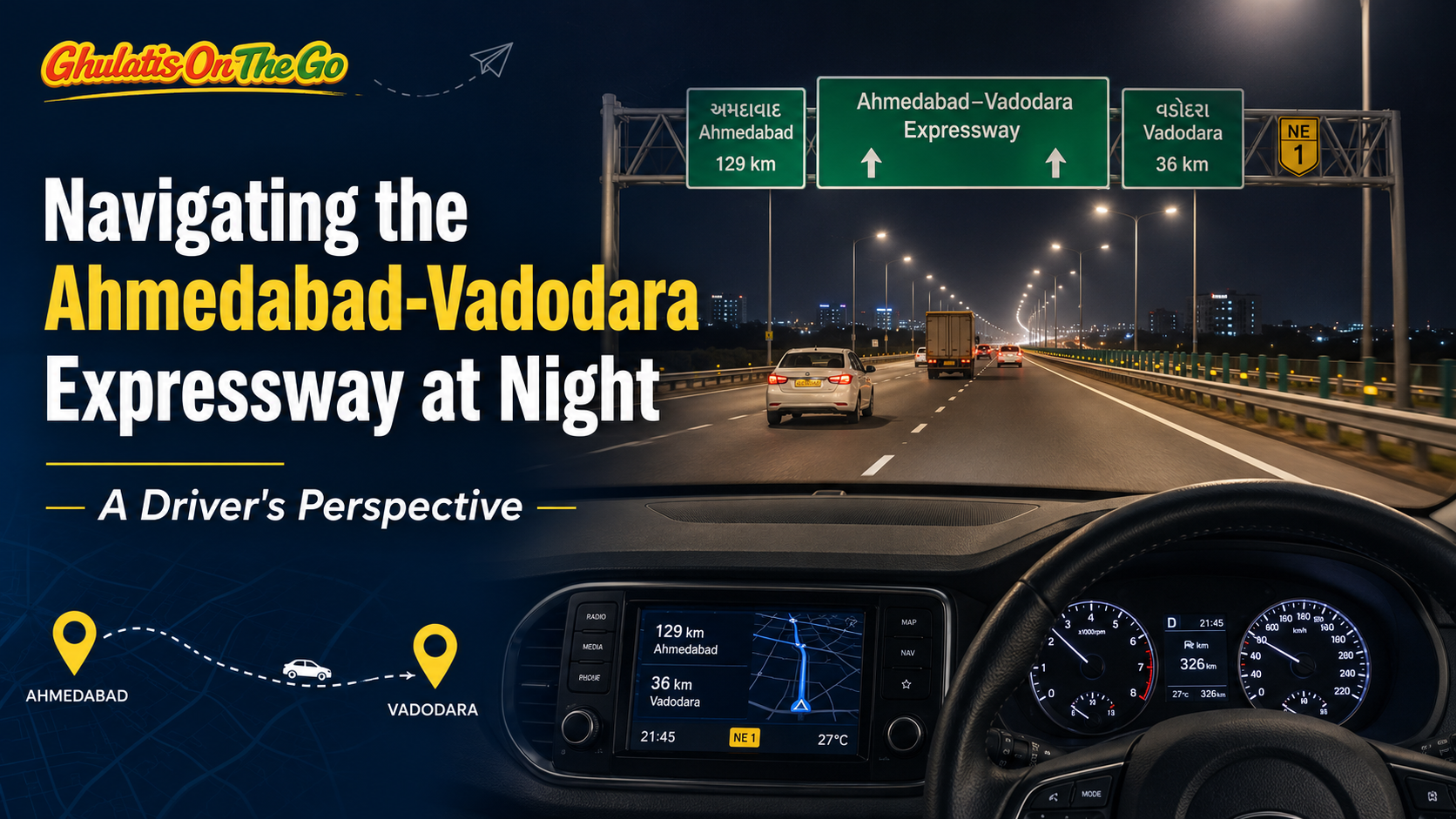
The Ghulatis On The Go family embarked on a night road trip from Vadodara to Ahmedabad, traveling along the Ahmedabad-Vadodara Expressway, also known as National Expressway 1 (NE-1) or the Mahatma Gandhi Expressway. This journey aimed to provide a real-time perspective on night driving conditions, traffic density, and the overall experience on one of India's busiest expressways. The trip commenced around 8:00 PM from Vadodara city, with an anticipated arrival on the expressway by 8:30 PM.
The Ahmedabad-Vadodara Expressway is approximately 95 kilometers long and was opened in 2004. It is designed to connect the cities of Vadodara and Ahmedabad, significantly reducing travel time between the two major urban centers. The family planned for a one-hour travel time on the expressway itself. This particular night drive offered insights into the challenges posed by heavy truck traffic, lane discipline, and the availability of amenities along the route.
Departure from Vadodara and Expressway Entry
The journey began in Vadodara city, with the initial drive through illuminated city streets. The city lights of Vadodara presented a pleasant view during the evening hours. The family noted the presence of various commercial establishments, including malls and restaurants, as they navigated through the city. The drive from the city center to the expressway entrance took approximately 30 minutes, aligning with their estimated timeline.
Upon entering the Ahmedabad-Vadodara Expressway, the initial observation was that the expressway appeared to be a four-lane road, despite prior information suggesting it was a six-lane highway. This discrepancy in lane count became a recurring point of discussion throughout the journey, particularly in relation to traffic management. The speed limit on this section of the expressway was indicated as 100 km/h.
Traffic and Driving Challenges
A significant aspect of the night drive was the heavy traffic encountered, especially the high volume of trucks. The expressway, being a primary commercial route, experienced continuous movement of heavy vehicles. This heavy truck traffic posed considerable challenges for maintaining consistent speed and lane discipline. The presence of slow-moving trucks often occupied both available lanes in one direction, forcing smaller vehicles to navigate carefully around them or reduce speed significantly.
The family observed instances where trucks would overtake each other, effectively blocking both lanes and creating temporary bottlenecks. This situation made it difficult for cars to maintain the posted speed limit of 100 km/h and necessitated frequent lane changes and cautious driving. The driver expressed frustration with the lack of clear lanes for faster-moving vehicles, suggesting that a six-lane configuration would be more appropriate given the traffic volume.
Toll Plazas and Amenities
The journey included passing through a toll barrier. A notable feature at the toll plaza was the segregation of lanes for cars and trucks. This system allowed cars to pass through more efficiently, avoiding the longer queues typically associated with heavy vehicle traffic. The family appreciated this arrangement, as it contributed to a smoother passage through the toll point.
Further along the expressway, the family stopped at a rest plaza. This rest area featured a Jagdish restaurant and an Indian Oil fuel station. While the family did not dine at the restaurant, they noted the cleanliness of the washroom facilities, indicating a well-maintained stopover point for travelers. However, it was observed that an EV charging station was not available at this rest plaza, which could be a consideration for electric vehicle owners planning a trip on this expressway.
Approaching Ahmedabad
As the journey progressed, the traffic density gradually decreased, allowing for a smoother driving experience. The expressway conditions were generally good, with clear visibility provided by streetlights. Signage along the route indicated distances to various cities, including Nadiad, Udaipur, Rajkot, and Gandhinagar, confirming the expressway's role as a connector to a broader network of destinations.
The final leg of the journey involved exiting the Ahmedabad-Vadodara Expressway and merging with city traffic in Ahmedabad. The transition from the expressway to the city roads was marked by a change in traffic patterns and a return to urban driving conditions. The city of Ahmedabad, like Vadodara, was well-lit at night, with decorative lights adding to the evening ambiance.
Practical Takeaways
- Traffic Conditions: The Ahmedabad-Vadodara Expressway experiences heavy truck traffic, particularly at night. Drivers should anticipate slower speeds and potential lane blockages due to trucks.
- Lane Discipline: Maintaining lane discipline can be challenging due to trucks occupying multiple lanes, requiring drivers to be vigilant and adapt their driving style.
- Expressway Configuration: While some sources suggest a six-lane expressway, the observed reality was a four-lane configuration in sections, impacting traffic flow.
- Toll Plaza Efficiency: The segregated lanes for cars and trucks at toll plazas help in managing traffic and reducing wait times for private vehicles.
- Rest Stop Amenities: The rest plaza offers dining options and fuel stations, but EV charging facilities were not observed.
- Night Visibility: The expressway is well-lit, providing good visibility for night driving.
- Travel Time: Despite heavy traffic, the estimated travel time on the expressway was largely maintained due to periods of smoother flow.
Watch the Original Journey
This article is connected to the original Ghulatis On The Go video below. Watch it for the complete visual experience and conversations from the road.
Key moments from the video
Continue exploring
Related guides, articles, and videos
These recommendations are matched to this Journey Article using its locations, routes, vehicles, categories, and practical travel topics.
Recommended travel guide
India Highway & Expressway Guides
Helpful notes on expressways, national highways, road conditions, rest breaks, toll planning, and safe long-distance driving.
Open this topic guideRelated reading