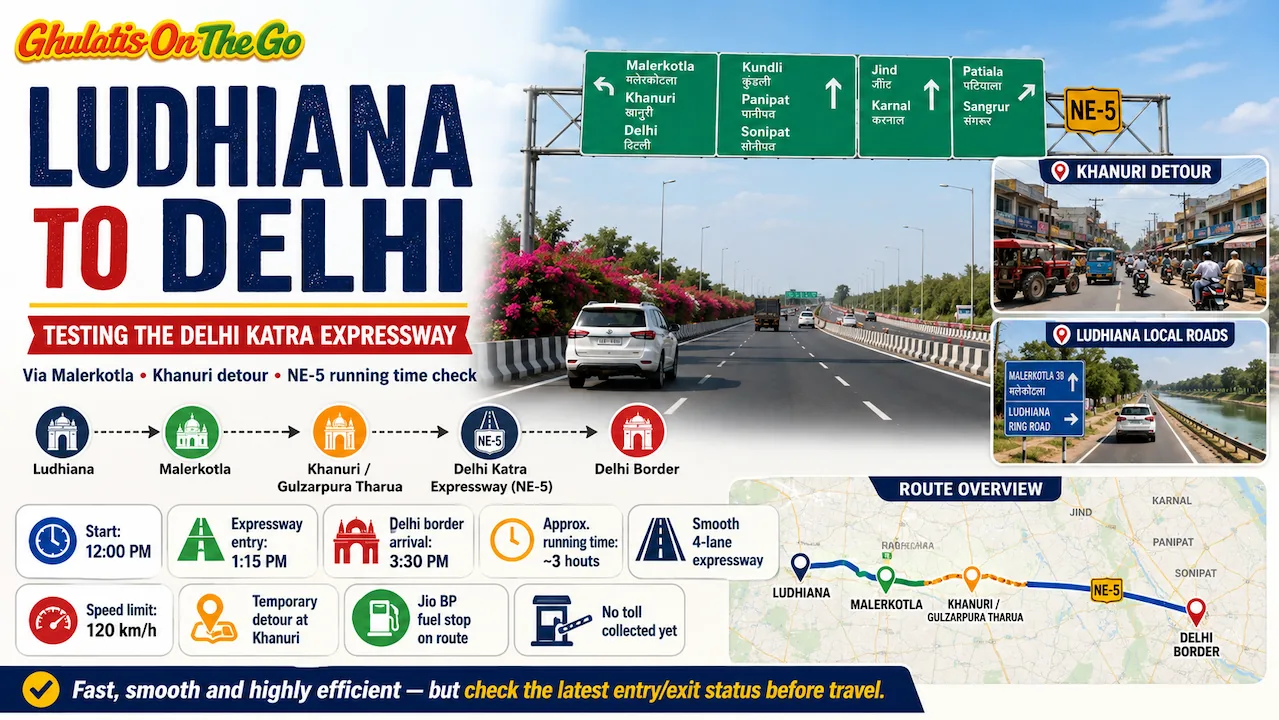

Embarking on an extensive road trip from Ludhiana, Punjab, to Udaipur, Rajasthan, the Ghulatis On The Go family undertook an 11-hour journey that showcased the evolving landscape of Indian highways. This detailed account covers their experience traversing the Delhi-Amritsar-Katra Expressway (NE-5) and the Delhi-Mumbai Expressway, offering insights into road conditions, travel times, and notable stops along the way. The trip, commencing at 8:00 AM, aimed to provide a comprehensive overview for fellow travelers considering this route.
The initial leg of the journey focused on reaching Gurugram and the Indira Gandhi International (IGI) Airport in Delhi. The family utilized the newly developed Delhi-Amritsar-Katra Expressway, a significant infrastructure upgrade designed to reduce travel time. Their route took them through Malerkotla, a city in Punjab, before connecting to the expressway. The video highlights the importance of strategic food stops and fuel breaks, especially on long journeys, to maintain momentum and avoid unnecessary delays.
Ludhiana to Malerkotla and the Delhi-Amritsar-Katra Expressway
The journey began from Ludhiana at 8:00 AM, with the initial drive heading towards Malerkotla. The road leading out of Ludhiana was a two-lane highway, flanked by lush green trees and occasional commercial establishments. Signage along this stretch indicated distances to various towns, including Malerkotla, which was initially 25 kilometers away, and Sangrur at 67 kilometers. The family noted the presence of a Pepsu Roadways bus, a common sight on these routes, as they made their way towards Malerkotla.
Upon approaching Malerkotla, the landscape featured more urban elements, with buildings and businesses lining the road. The family decided to make a quick breakfast stop at a Subway outlet located near a GreenWood Dhaba, opting for a faster meal to save time on their extensive journey. This strategic decision allowed them to resume their drive quickly, minimizing the impact on their overall travel schedule. They arrived in Malerkotla at 8:45 AM, having covered the initial distance and taken a 15-minute break, totaling 45 minutes of travel time.
Shortly after Malerkotla, the route connected to the Delhi-Amritsar-Katra Expressway (NE-5). The entrance to the expressway was marked by clear signage, indicating directions to Jammu (left) and Delhi (right), with a straight path leading to Nabha. The family chose the right turn towards Delhi, marking their official entry onto the expressway at 9:00 AM. This section of the expressway was noted for its smooth, four-lane asphalt, allowing for a comfortable cruising speed of 120 km/h. The absence of heavy traffic and the presence of bougainvillea plants along the median contributed to a pleasant driving experience. At this point, Delhi was approximately 280 kilometers away.
Navigating the Delhi-Mumbai Expressway and Jaipur Bypass
The journey continued on the Delhi-Amritsar-Katra Expressway, with the family observing the ongoing development of rest plazas and fuel stations along the route. While some rest areas were still under construction, the sight of an Indian Oil petrol pump being built offered a promising sign for future travelers. The expressway featured clear signage for exits to cities like Patiala and Sangrur, emphasizing the connectivity provided by this new corridor. The family noted that the expressway was particularly beneficial for taxi services heading towards IGI Airport, significantly reducing travel times.
After covering a substantial distance on the Delhi-Amritsar-Katra Expressway, the family transitioned to the Western Peripheral Expressway, also known as the Kundli-Manesar-Palwal (KMP) Expressway. This transition involved exiting the Delhi-Amritsar-Katra Expressway near Manesar and then taking a left turn to merge onto the KMP Expressway. The KMP Expressway, a six-lane highway, offered a smooth ride, although the family did not extensively document this section as they had covered it in previous trips. The primary goal was to connect to the Delhi-Mumbai Expressway, which would lead them towards Jaipur and eventually Udaipur.
The entry onto the Delhi-Mumbai Expressway was a significant milestone. This eight-lane expressway, known for its high-speed limits and advanced infrastructure, provided an exhilarating driving experience. The family noted the excellent road conditions and the absence of traffic, allowing them to maintain a steady pace. The expressway featured clear signage for various exits, including Palwal, Firozpur Jhirka, and Mumbai. The journey on this expressway was characterized by long stretches of open road, flanked by green landscapes and occasional hills, offering picturesque views, especially during the monsoon season.
Udaipur Approach and Final Leg
As the family approached Jaipur, the Delhi-Mumbai Expressway offered an exit for Jaipur and Ajmer. They took this exit, leaving the Delhi-Mumbai Expressway (NE-4) to continue their journey towards Udaipur. The road from this exit was a six-lane highway, NH 148-C, which served as the Jaipur Ring Road (Southern Corridor). This section of the route was bustling with traffic, including numerous trucks, indicating a busy commercial corridor. The family observed the urban development along the highway, with hotels and businesses lining the road.
After a brief stop for refreshments at a Burger King drive-through, the journey resumed towards Udaipur. The road conditions remained excellent, with the highway cutting through a scenic landscape of rolling hills and lush greenery. The family encountered a toll plaza where they paid Rs. 55, noting the reasonable charges for the quality of the road. As they progressed, the terrain became more mountainous, with the highway winding through the beautiful Aravalli Hills. This section of the drive was particularly enjoyable, offering stunning views and a sense of tranquility away from the city bustle.
The final leg of the journey involved navigating through the hilly terrain and passing through a well-lit tunnel, a testament to the engineering marvels along the route. The family noted the increasing beauty of the landscape as they drew closer to Udaipur, with the mountains becoming more prominent and the surroundings more serene. They passed through another toll plaza, paying Rs. 85, before finally reaching the outskirts of Udaipur. The journey concluded at 7:00 PM, marking a total travel time of 11 hours from Ludhiana to Udaipur.
Practical Takeaways for Travelers
This extensive road trip from Ludhiana to Udaipur offers several practical takeaways for travelers planning a similar journey. The new expressways, particularly the Delhi-Amritsar-Katra Expressway and the Delhi-Mumbai Expressway, significantly reduce travel time and offer a smooth, comfortable driving experience. However, it is crucial to plan for food and fuel stops, as facilities might be sparse on certain newly opened sections of the expressways. The family's decision to opt for quick service restaurants at strategic locations proved effective in saving time.
Drivers should be mindful of speed limits, especially on sections of the Urban Extension Road II (UER 2), where speed cameras are present. While the expressways generally allow for high speeds, adhering to posted limits is essential to avoid penalties. The journey through Rajasthan, particularly the Aravalli Hills, offers breathtaking scenic views, making it an ideal route for those who appreciate natural beauty. Despite the long hours, the combination of excellent road infrastructure and picturesque landscapes makes this Ludhiana to Udaipur road trip a memorable and enjoyable experience.
Watch the Original Journey
This article is connected to the original Ghulatis On The Go video below. Watch it for the complete visual experience and conversations from the road.
Continue exploring
Related guides, articles, and videos
These recommendations are matched to this Journey Article using its locations, routes, vehicles, categories, and practical travel topics.
Recommended travel guide
India Road Trip Guides
Practical route planning, packing, timing, toll, food-stop, and family comfort guidance for Indian road trips.
Open this topic guideRelated reading