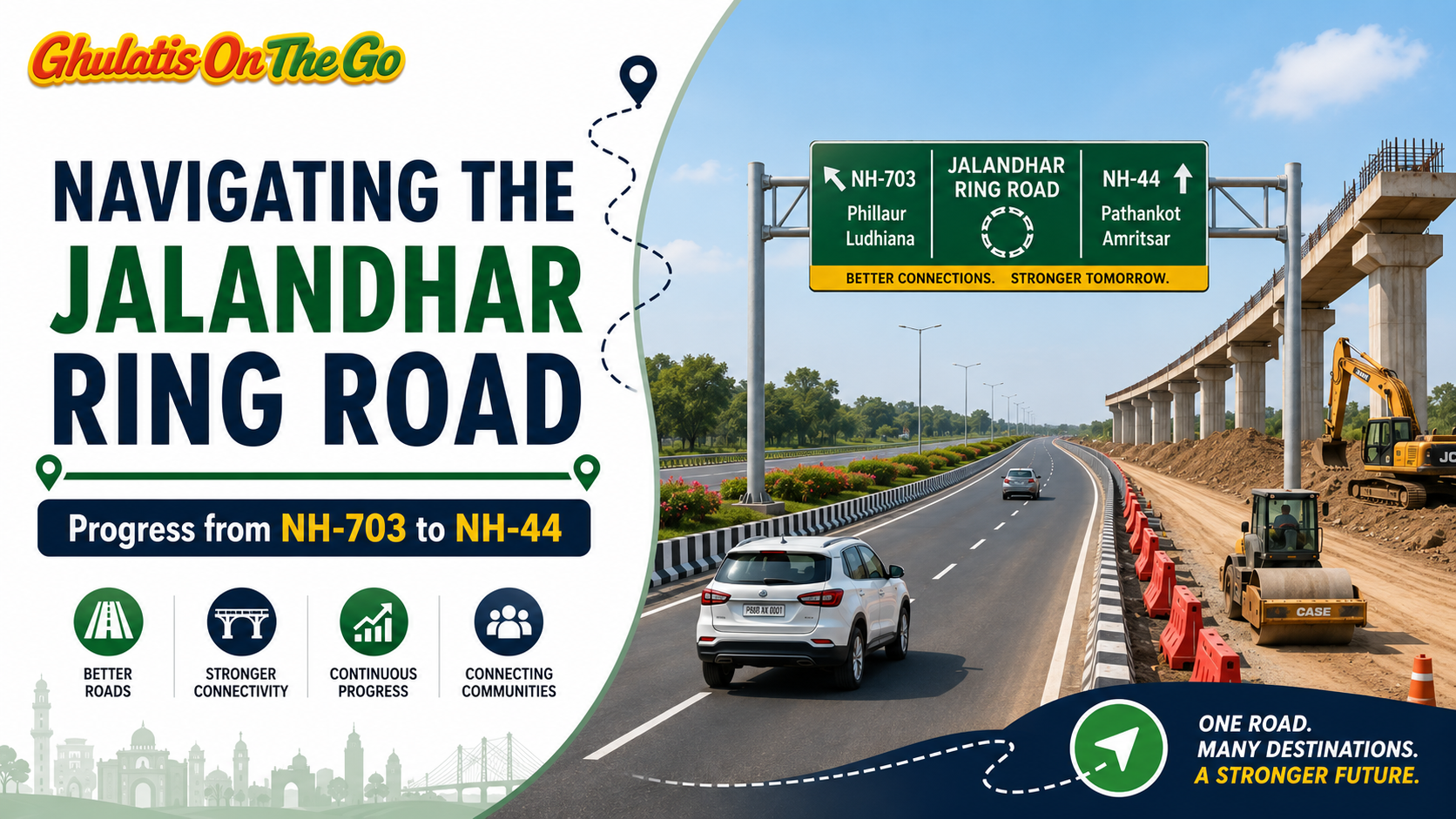

The Ghulatis On The Go team embarked on a journey to document the ongoing construction of the Jalandhar Ring Road, specifically focusing on the stretch connecting Amritsar Road to Pathankot Road. This video provides a comprehensive update on the ground reality of this significant infrastructure project, offering insights into the current state of development and future connectivity prospects. The journey begins on National Highway 44 (NH44), which forms part of the Jalandhar bypass, and proceeds towards the new bypass construction.
The purpose of this drive was to provide viewers with a real-time experience of the under-construction road, highlighting key progress areas and potential benefits upon completion. The Jalandhar Ring Road is designed to alleviate traffic congestion within the city by diverting heavy vehicles and connecting major highways, ultimately improving travel times across Punjab. The team aimed to cover village-wise route details, land development, and insights into road width, flyovers, and future expansion plans.
Navigating the Jalandhar Bypass on NH44
The journey commenced on the Jalandhar bypass, which is part of NH44. The initial segment of the drive showcased the existing bypass road, which appeared to be in good condition, described as a six-lane highway. The speed limit on this section was noted to be 90 km/h. Along this stretch, the team observed various commercial establishments and streetlights, which were highlighted for their effectiveness, especially at night, creating an appealing visual experience for drivers.
The initial part of the bypass, previously covered in earlier videos, connects Kang Sabu to the Grand Trunk (GT) Road near Haveli. This section is nearing completion. The current video, however, shifts focus to the Amritsar bypass, which is the second spur of the Jalandhar bypass. This new construction is expected to connect to the Delhi-Katra Expressway near Chehru Bridge, offering a crucial link for regional travel.
Exploring the Under-Construction Sections
As the drive progressed, the team encountered sections of the bypass that are still under heavy construction. Concrete pillars, intended to support future flyovers, were visible, indicating significant progress in the structural development. While the pillars were largely complete, the trusses that would form the road surface were yet to be installed. The team made a stop to provide a closer look at these construction elements, emphasizing the scale of the project.
The route involved navigating through areas where earthwork and road leveling were actively underway. Large concrete panels, destined to form retaining walls, were observed stacked along the roadside, signifying the extensive material preparation for the project. The road conditions in these areas were naturally unpaved and uneven, requiring careful driving. Despite the challenging terrain, the team’s vehicle, an Isuzu, demonstrated its capability in traversing the loose soil and gravel.
Connecting to the Delhi-Katra Expressway and Pathankot Road
A significant aspect of the Jalandhar Ring Road is its planned integration with the Delhi-Katra Expressway. The video highlighted the point where the bypass will eventually connect to this major expressway, specifically near the East Food Village and Chehru. This connection is anticipated to streamline travel towards destinations like Pathankot and Jammu, reducing transit times and enhancing overall connectivity.
The construction extends towards the Pathankot Road, with visible progress in earth filling and the laying of initial road layers. While the blacktop (asphalt) layer was not yet present in many sections, the groundwork indicated a broad and well-planned road. The team noted that the construction of underpasses and bridges along this route was also well underway, with many structures already built and awaiting final integration. The overall impression was that the project, despite its current state, is moving forward with considerable momentum.
Observations and Future Prospects
Throughout the drive, the Ghulatis On The Go team provided continuous commentary on the construction progress, noting the extensive scale of the project and the visible efforts of the construction crews. The presence of heavy machinery, water sprinklers for dust control, and ongoing earth compaction activities underscored the active nature of the work. The team expressed optimism about the timely completion of the project, given the apparent dedication and resources being deployed.
The Jalandhar Ring Road is poised to significantly impact regional travel and economic development. By diverting heavy traffic, it will reduce congestion within Jalandhar city, making daily commutes smoother for residents. The improved connectivity to major highways like Amritsar Road, Pathankot Road, and the Delhi-Katra Expressway will facilitate faster movement of goods and people, potentially boosting trade, tourism, and real estate values along the corridor. The project represents a substantial investment in modernizing Punjab's infrastructure.
Practical Takeaways
- Current Road Conditions: While sections of the Jalandhar bypass on NH44 are smooth and well-maintained, the newly constructed portions of the ring road are still under development, featuring unpaved surfaces, gravel, and ongoing earthwork. Drivers should expect varying road conditions and potential detours.
- Strategic Connectivity: The Jalandhar Ring Road is a crucial link, connecting major routes like Amritsar Road and Pathankot Road, and integrating with the Delhi-Katra Expressway. This will significantly reduce travel time and traffic through Jalandhar city.
- Infrastructure Development: The project involves extensive construction, including numerous pillars for flyovers, retaining walls, and underpasses, many of which are already in advanced stages. This indicates a robust and comprehensive infrastructure plan.
- Regional Impact: Upon completion, the ring road is expected to enhance regional connectivity, benefiting commuters, businesses, and potentially influencing real estate development in surrounding areas.
- Patience for Completion: Although significant progress is visible, the final blacktop layers and full operational status for all sections will require additional time. Travelers should stay updated on construction phases for the smoothest journey.
Watch the Original Journey
This article is connected to the original Ghulatis On The Go video below. Watch it for the complete visual experience and conversations from the road.
Key moments from the video
Continue exploring
Related guides, articles, and videos
These recommendations are matched to this Journey Article using its locations, routes, vehicles, categories, and practical travel topics.
Recommended travel guide
India Highway & Expressway Guides
Helpful notes on expressways, national highways, road conditions, rest breaks, toll planning, and safe long-distance driving.
Open this topic guideRelated reading