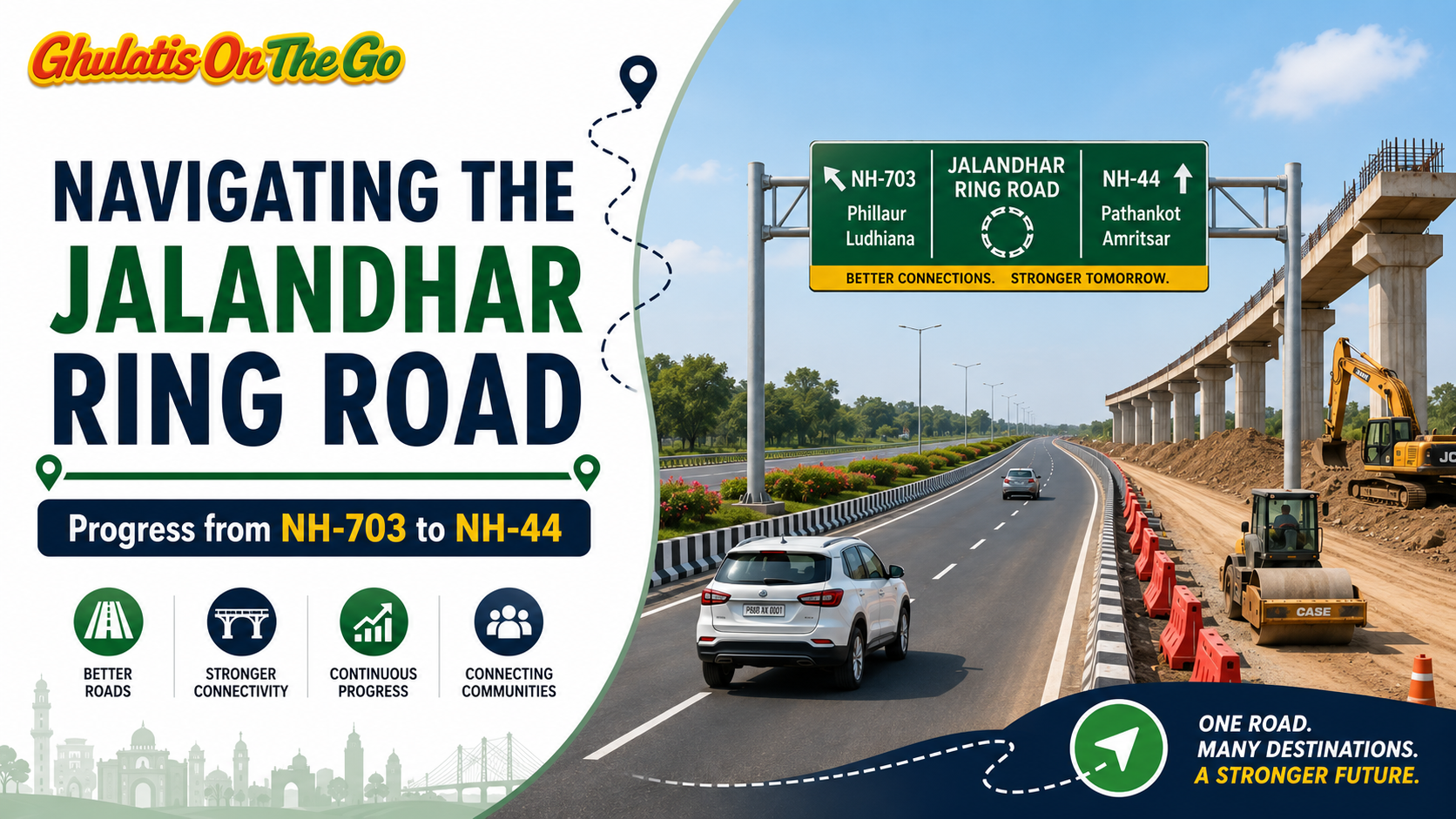

The ongoing development of the Jalandhar Ring Road, a crucial infrastructure project aimed at improving connectivity and easing traffic congestion, received a comprehensive update in August 2026. This report details a drive undertaken by the Ghulatis On The Go team, covering the stretch from National Highway 703 (Nakodar Road side) to National Highway 44 (Delhi/Amritsar GT Road). The journey provided a firsthand look at the significant progress made over the past few months, highlighting completed sections, ongoing work, and areas still awaiting major development.
The Jalandhar Ring Road project is designed to offer a seamless bypass for traffic, diverting it away from the city's core and enhancing the flow of goods and people across the region. The route covered in this update is particularly important as it connects two major national highways, promising to reduce travel times and boost economic activity once fully operational. The team's previous visit in March 2026 serves as a valuable benchmark, allowing for a direct comparison of the advancements achieved in the intervening period.
The drive commenced from the Nakodar Road side, specifically from the NH 703, which is a four-lane highway. The initial section of the journey revealed a mix of completed and under-construction areas, with clear signs of recent work. The team noted that while some parts of the road were still unpaved, significant progress had been made in laying down the initial layers of the highway. The presence of heavy machinery and construction materials indicated active development across various points of the route.
Progress on the Nakodar Road Side
Starting from the Nakodar Road side, the team observed that the Jalandhar Ring Road begins near Kang Sabu Village, just before the main village area. A notable improvement since the March 2026 visit was the installation of trusses on the pillars of the elevated sections. During the previous visit, these pillars stood bare, indicating that the structural framework for the elevated highway had advanced considerably. While earthwork for the ramps to access the elevated section was still in its early stages, the placement of cranes suggested that further progress on this front was imminent.
The comparison with the March 2026 footage revealed a clear acceleration in construction. The pillars, which were previously just concrete structures, now supported the initial segments of the flyover. This indicated that the project was moving steadily towards its completion, with key structural elements being put in place. The immediate area around the elevated section, however, still required significant earthwork to create the necessary ramps for vehicles to ascend and descend the ring road.
Driving the Under-Construction Stretch
The journey continued onto the under-construction stretch of the Jalandhar Ring Road, leading towards NH 44. This segment presented a challenging but insightful drive, as the road was largely unpaved and consisted of loose soil and gravel. Despite the rough terrain, the team noted that the leveling work had improved significantly since their last visit. Previously, this section was characterized by uneven surfaces and a lack of proper grading, making it difficult to navigate. The current state, while still requiring final paving, showed a more consistent and prepared surface.
A major development observed on this stretch was the commencement of blacktop work in certain areas. This marked a crucial step towards the final surfacing of the highway, indicating that the foundational layers were sufficiently stable. Additionally, retaining walls along the sides of the road had been completed in many sections, further solidifying the structure of the new highway. These improvements suggested that the project was progressing well, with various construction phases overlapping to expedite completion.
Encountering Challenges and Detours
As the team advanced further along the ring road, they encountered sections where construction was still ongoing, particularly concerning the overhead power lines. These areas required careful navigation, as the road surface remained unpaved and dusty. The presence of heavy construction vehicles, including dump trucks and graders, indicated active work on leveling and preparing the roadbed. The team noted that while the road was generally navigable, certain parts were particularly soft and muddy, necessitating a cautious approach to avoid getting stuck.
A significant challenge arose when the team reached a point where the direct path of the ring road was blocked by an incomplete railway overbridge. This necessitated a detour through Jamsher Village, a small rural settlement. The detour involved navigating through narrow village roads and crossing a railway line, highlighting the complexities of building large-scale infrastructure projects through populated areas. This diversion, while temporary, added an unexpected element to the journey and provided a glimpse into the local life surrounding the construction zone.
Rejoining the Ring Road and Final Stretch
After successfully navigating through Jamsher Village, the team rejoined the Jalandhar Ring Road, finding themselves back on the main construction alignment. This section of the road, which they had been unable to access during their previous visit, showed considerable progress. The pillars for the elevated sections were in place, and some trusses had been installed, indicating that the structural work was well underway. The presence of cranes and other heavy machinery confirmed active construction, with a clear focus on completing the elevated portions of the highway.
The final stretch of the journey led the team towards the intersection with NH 44, the Delhi/Amritsar GT Road. This area, known as Eastwood Village, marked the culmination of their drive along the under-construction ring road. The sight of the completed flyovers and the bustling traffic on NH 44 provided a stark contrast to the dusty, unpaved sections they had traversed. The ring road here was designed to seamlessly integrate with the existing national highway, offering multiple entry and exit points for vehicles. The overall impression was one of significant progress, with the vision of a fully functional ring road slowly but surely taking shape.
Practical Takeaways for Travelers
For travelers and commuters in the Jalandhar region, the ongoing construction of the Jalandhar Ring Road promises substantial benefits. Once completed, the ring road is expected to drastically reduce travel times between NH 703 and NH 44, bypassing the congested city center. The current state of construction, as observed in August 2026, indicates that while significant progress has been made, certain sections still require careful navigation due to unpaved surfaces and active construction work. Drivers should be prepared for potential detours and varying road conditions, especially during the monsoon season when unpaved sections can become muddy.
The development of elevated sections and retaining walls suggests a robust and modern highway infrastructure. The integration of the ring road with existing national highways, particularly NH 44, will create new opportunities for regional connectivity and economic growth. While the exact completion date remains to be seen, the consistent progress observed by the Ghulatis On The Go team offers a positive outlook for the future of road travel in Jalandhar.
Watch the Original Journey
This article is connected to the original Ghulatis On The Go video below. Watch it for the complete visual experience and conversations from the road.
Key moments from the video
Continue exploring
Related guides, articles, and videos
These recommendations are matched to this Journey Article using its locations, routes, vehicles, categories, and practical travel topics.
Recommended travel guide
India Highway & Expressway Guides
Helpful notes on expressways, national highways, road conditions, rest breaks, toll planning, and safe long-distance driving.
Open this topic guideRelated reading