
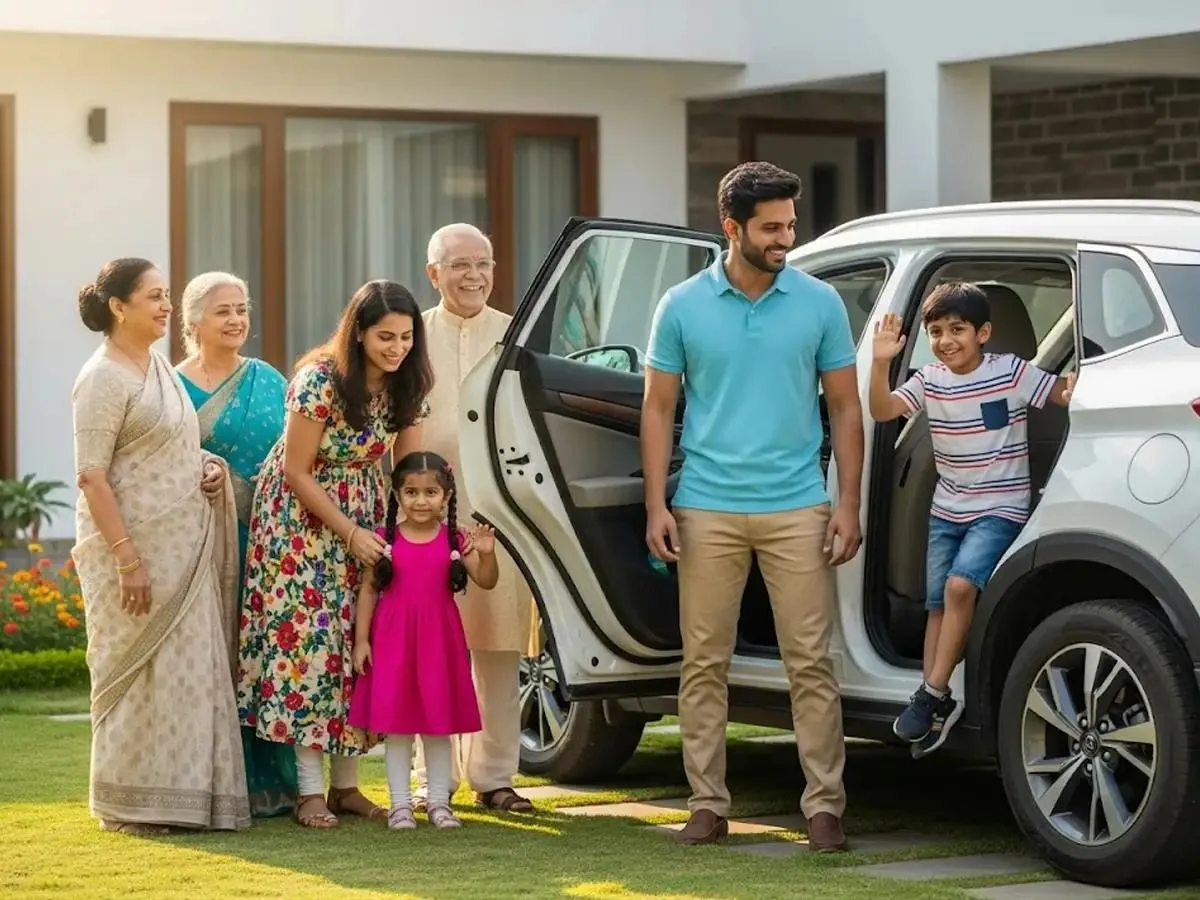
A family road trip can be about much more than the destination. It may mean taking parents back to a hometown, visiting relatives after years apart, spending a few days in the hills, or making a long-awaited visit to a temple or gurdwara. Travelling together creates space for conversations and memories that are difficult to fit into daily life.
But an itinerary that suits younger adults may not suit every older passenger. The distance on a navigation app does not explain whether someone can comfortably climb into the car, sit for long stretches, find a usable washroom, manage their regular medicines or walk from a hotel car park to the room. Those practical details can shape the entire holiday.
The right starting point is the individual, not their age. Some older adults travel independently and enjoy demanding itineraries; others may need help with mobility, chronic conditions, hearing, vision or balance. India's National Programme for Health Care of the Elderly recognizes these varied needs through preventive, curative and rehabilitative care and promotes active, healthy ageing.
This guide covers practical planning questions, Indian road rules, National Highway traveller services, government weather warnings and pilgrimage considerations. It is general travel guidance, not medical clearance for an individual traveller.
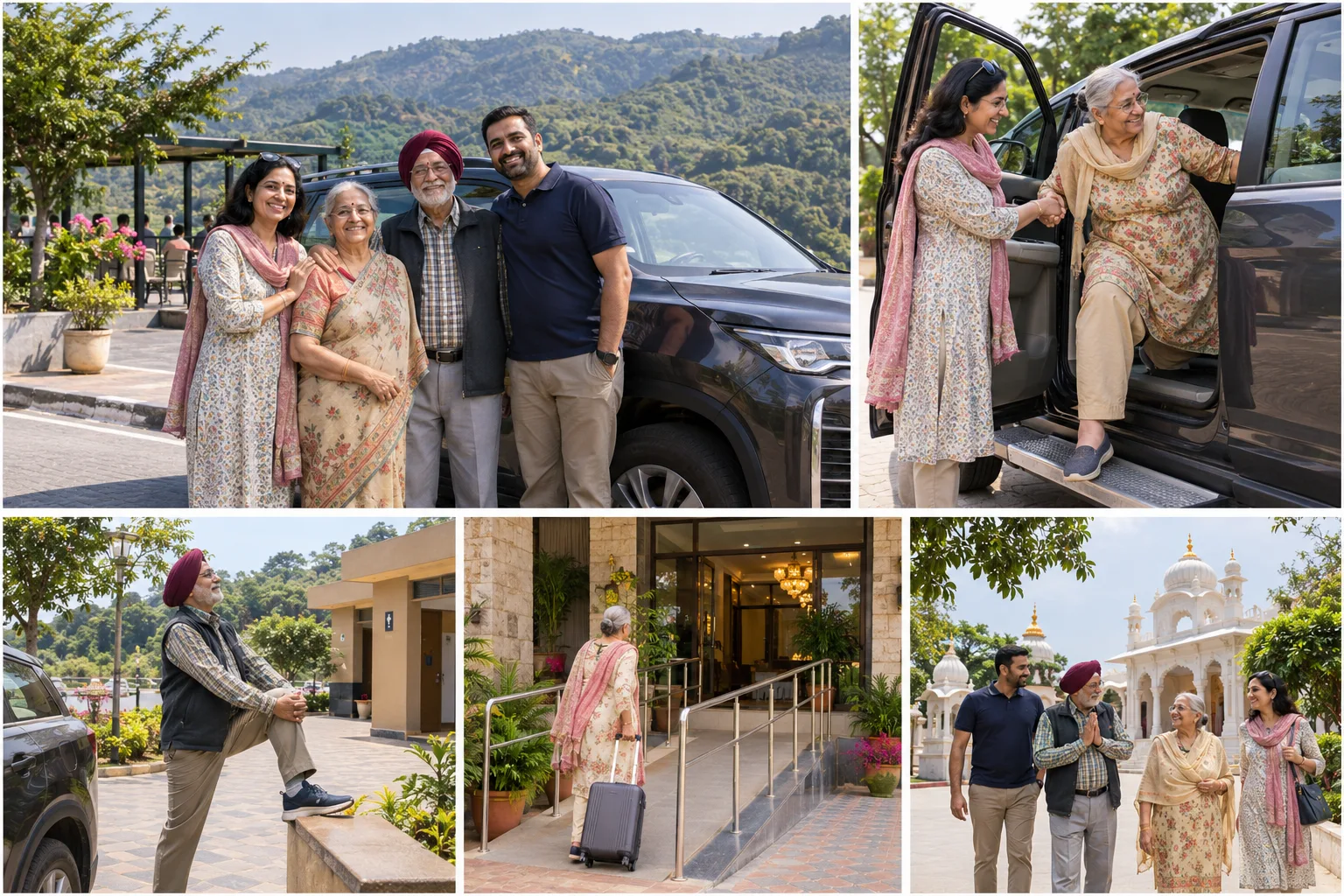
1. Plan the Journey with Your Parents, Not Just for Them
Start by asking the people who will travel what they actually want from the trip. Is the priority a peaceful visit to family, a pilgrimage, a change of scenery or a full sightseeing holiday? What part of a car journey do they find uncomfortable? Would they prefer shorter driving days, a familiar meal schedule, a room near the lift or time alone to rest?
A comfortable itinerary follows the answers. A person who manages stairs easily may be happy in a hillside guesthouse. Someone who uses a walking frame could require a step-free entrance and a bathroom with reliable support rails. A passenger who normally travels without difficulty might still prefer an earlier hotel check-in on a hot or crowded route.
Avoid assigning limitations on the basis of age alone. Equally, avoid assuming that an older relative can do everything they did on a previous trip. Ask about current needs and preferences, and allow them to change during the journey. Keep the plan flexible enough that cancelling an attraction or adding an overnight stop is not treated as a failure.
When comparing destinations, consider the complete journey: the driveway at home, stops along the highway, the entrance to the accommodation, the walking distance at the destination and the return route. A place may be reachable by car but still be difficult to visit once the vehicle is parked.
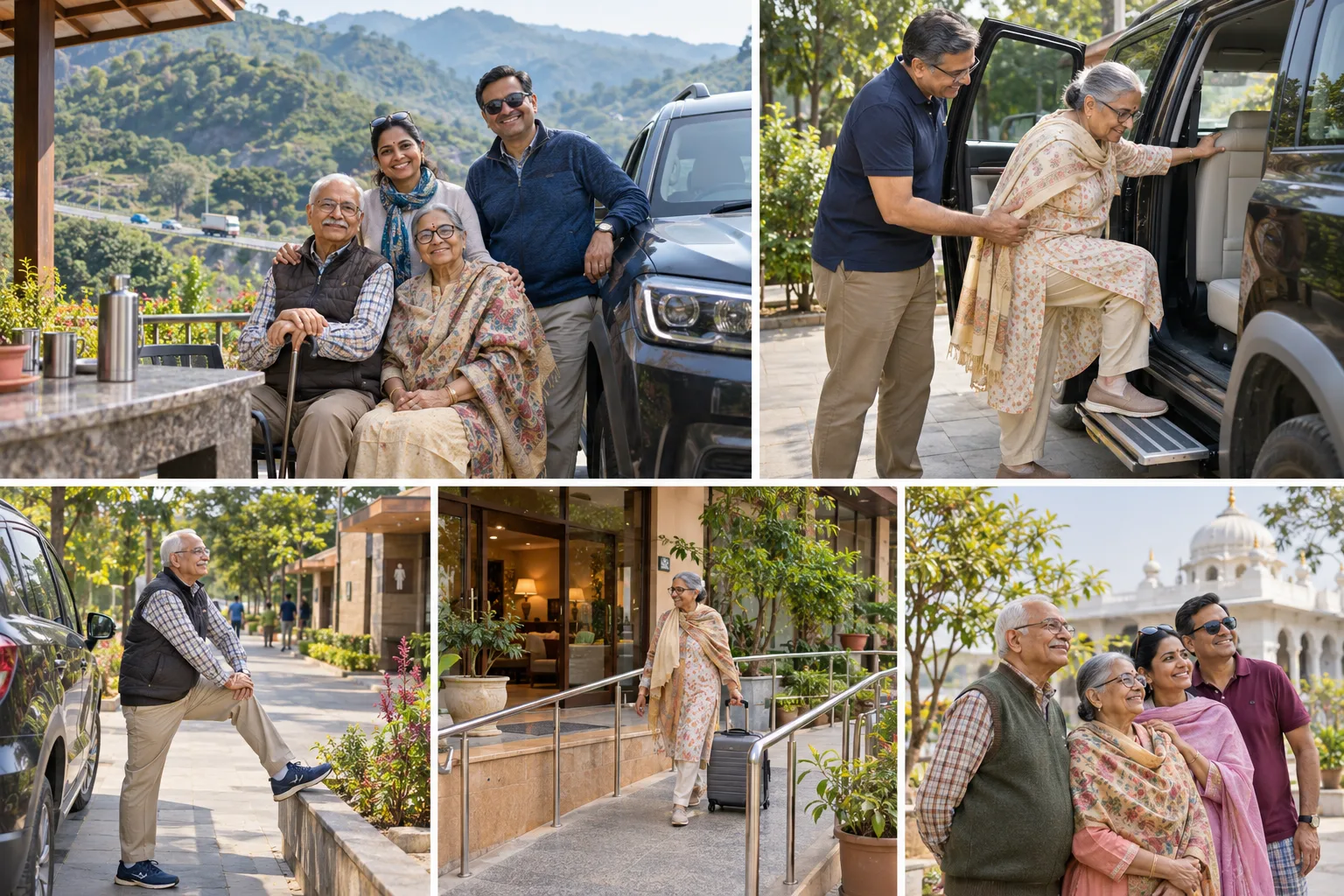
2. Discuss Health Needs Before Booking a Demanding Route
Health preparation should be tailored to a person's actual medical and mobility needs rather than based on a universal senior-citizen checklist.
If a parent has a heart or lung condition, diabetes, mobility limitation, recent medical procedure or other concern that may affect the journey, speak to their own healthcare professional about the proposed route. Tell the clinician about expected driving days, weather, planned walks, altitude and the availability of medical services. Ask whether specific precautions, changes in activity or medical equipment are needed. Do not alter doses, fluid restrictions or prescribed treatment simply to fit the holiday schedule.
Prepare a short, readable medical information sheet: the person's name, relevant conditions, allergies, current medicines and dosages, treating clinician's contact details and a family emergency contact. Keep a copy available to an accompanying adult rather than leaving the only copy on a locked phone. Take prescribed medication in appropriate quantities, including any reserve recommended by the prescriber, and follow its labelled storage instructions.
If medicines need refrigeration, or if the traveller uses oxygen, insulin supplies or a medical device, work out the transport and power arrangements before departure. Do not assume that a hotel refrigerator, roadside pharmacy or electric socket will be available without confirmation. Medicines needed during the day belong in an accessible bag, not below the rest of the luggage.
Families considering demanding pilgrimages such as the Char Dham Yatra should consult the current official health advisories for the destination rather than applying general advice intended for an ordinary low-altitude road holiday.
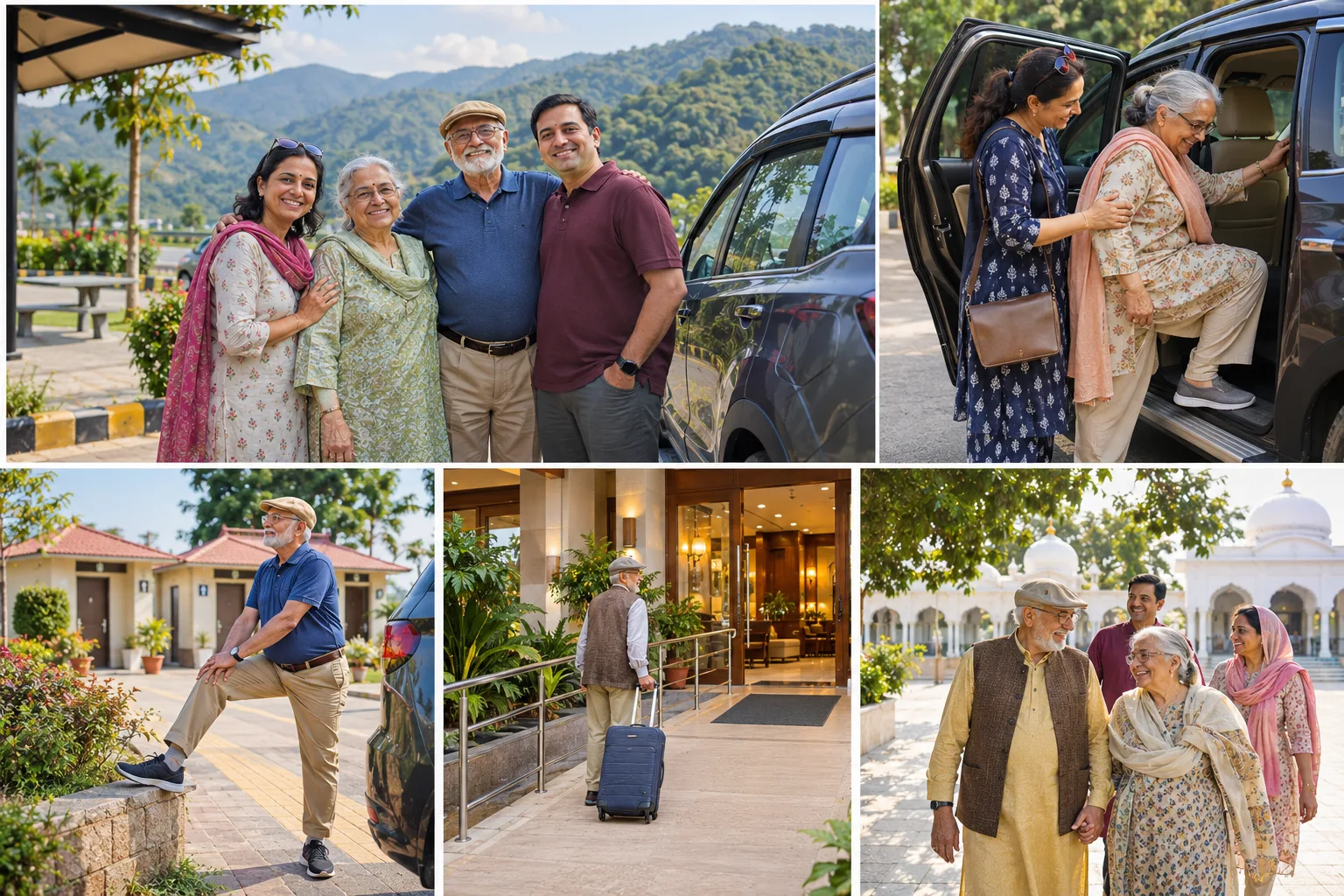
3. Select the Vehicle by Actually Trying the Seats and Doors
An SUV is not automatically the most comfortable vehicle for every older traveller. A high cabin can require a difficult step up; a low seat can make standing up awkward. A roomy MPV may work well for one family, while a sedan with a comfortable seat height may be preferable for another. The correct choice depends on the passenger and the specific car, not the body-style label.
Arrange a stationary trial before the trip. Can the passenger approach the door without stepping over a deep drain or kerb? Is there room to open the door fully? Can they sit down, move their legs inside and get out again without twisting or straining? Are the handholds useful? Does the seat give adequate support? Can a walker or folded wheelchair fit without obstructing occupants or their seat belts?
A short drive on ordinary roads can reveal whether the suspension, cabin temperature, seat position and road noise are comfortable. Check whether the air-conditioning reaches the rear passengers and whether the planned seating arrangement leaves everyone enough space. Pack luggage so that it cannot interfere with a door, footwell, seat belt or the driver's view.
India's Motor Vehicles (Driving) Regulations, 2017 require the driver to ensure that the driver and other occupants wear seat belts wherever they are provided. Section 194B of the Motor Vehicles Act, 1988 also addresses driving without a safety belt or carrying passengers without one. An older passenger should not be moved to an unsafe luggage area or unbelted seat in the name of comfort.
If a person must remain in a wheelchair while travelling, seek specialist advice about a suitable vehicle and occupant restraint system. An ordinary wheelchair placed unsecured in a vehicle is not a substitute for a designed travel seat. If hiring a car and driver, discuss the passenger's boarding needs, luggage space, rest stops and driver schedule before paying.
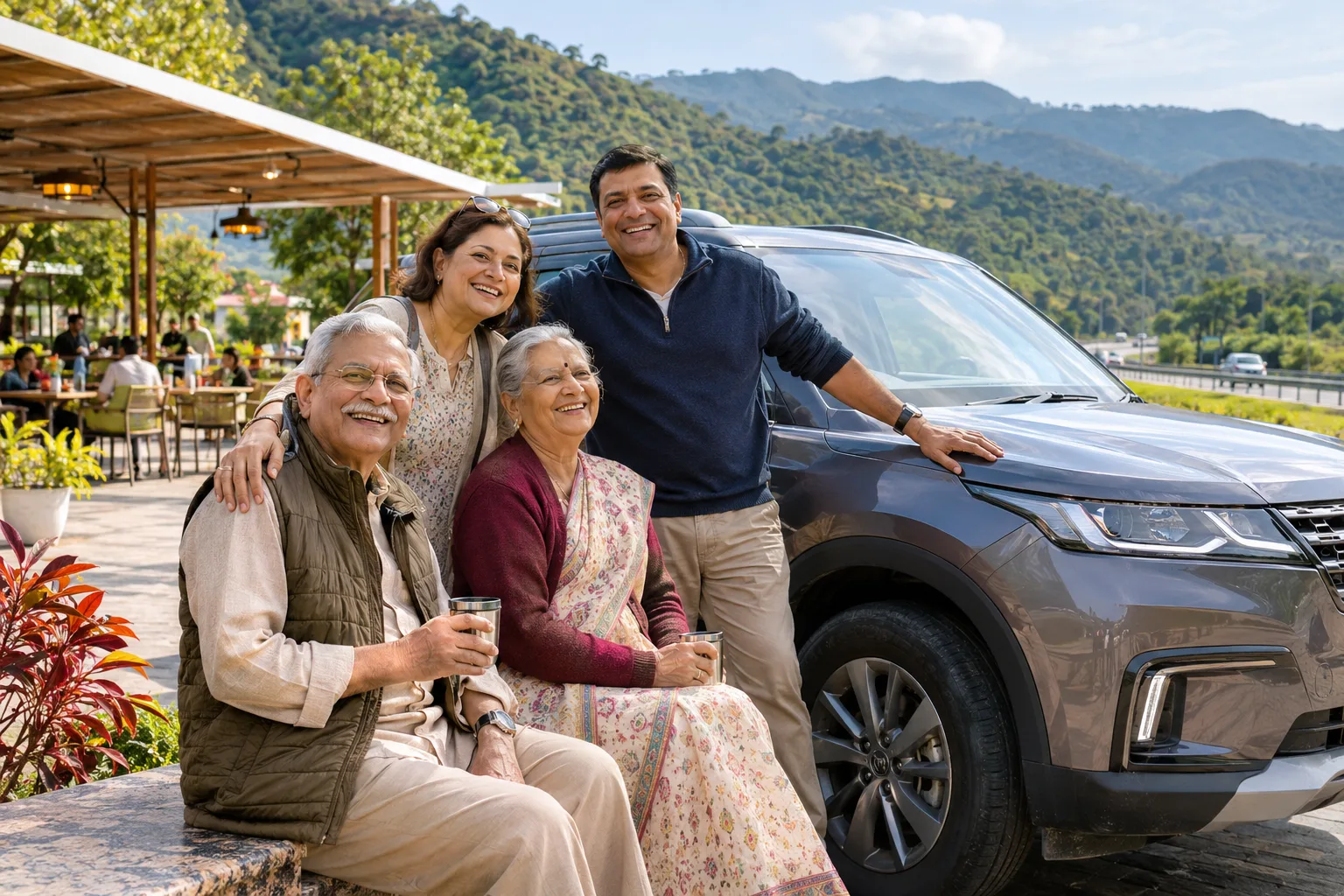
4. Make Rest Breaks Part of the Itinerary
A route planner estimates travel under its own traffic assumptions; a family journey also includes meals, washrooms, fuel or charging, traffic diversions, weather, boarding and time to stretch. The actual arrival time will therefore depend on what happens along the route.
Rather than planning a driving day around the longest possible distance, identify safe places to stop and an acceptable overnight destination. Ask the older traveller how they feel during the journey and shorten a stage if needed. For one family, a rest stop is a brief visit to the washroom. For another, it includes a sit-down meal and sufficient time to move around safely.
At a safe stop, provide an opportunity to leave the car, use the washroom and change position as appropriate. Someone who can walk comfortably may appreciate a gentle walk; someone with restricted mobility may need a different arrangement discussed with their clinician. Long immobility can be relevant to travellers with certain medical histories, including previous blood clots. Avoid prescribing a universal movement schedule or recommending aspirin, compression garments or other treatments without individual medical advice.
The National Highways Authority of India's Rajmargyatra service provides National Highway route planning, toll information, facilities and a complaints channel. Use it to help investigate likely routes and stops, while remembering that an online listing does not prove a toilet is accessible or a service is open at a particular hour.
A good plan includes a backup stopping option and time to avoid rushing. It is also considerate: no passenger should have to apologise for needing a washroom or a break that was foreseeable when the itinerary was made.
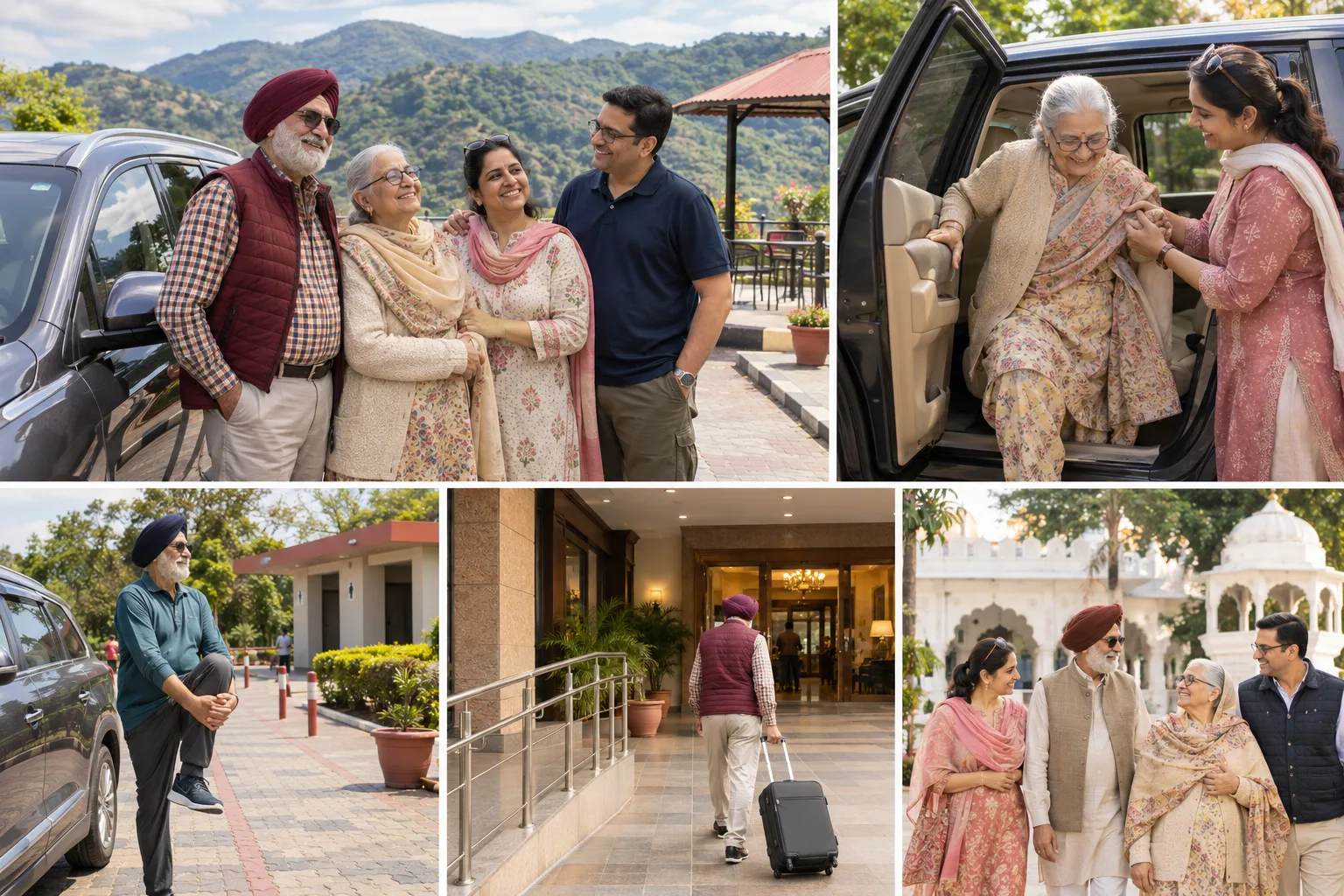
5. Check Toilets and Walking Access Instead of Relying on Labels
Roadside toilet availability and accessibility vary between individual locations. A petrol pump, dhaba, restaurant or rest area may have facilities, but the entrance could involve steps, an uneven surface or a long walk from parking. A toilet described online as accessible may still lack the space or fixtures a particular visitor needs.
Before a long journey, identify potential stops and contact those that are essential to the traveller's needs. Ask whether the toilet is on the ground floor, whether a wheelchair can get through the doorway, whether grab rails are present and whether there is step-free access from the parking area. Confirm whether the washroom will be available at the expected time. If mobility is a concern, a single photograph of a building entrance is not enough evidence.
India's Harmonised Guidelines and Standards for Universal Accessibility in India, 2021 provide a national accessibility reference. They are useful when considering features such as step-free routes and accessible facilities, but they do not certify that any particular roadside business meets the traveller's needs.
Think about the complete path: vehicle to toilet, toilet to seating area, and back to the vehicle. Avoid planning an essential washroom break at a place where access is uncertain unless there is a verified alternative nearby. Build in time for unhurried use of facilities; accessibility should never be treated as a reason to rush.
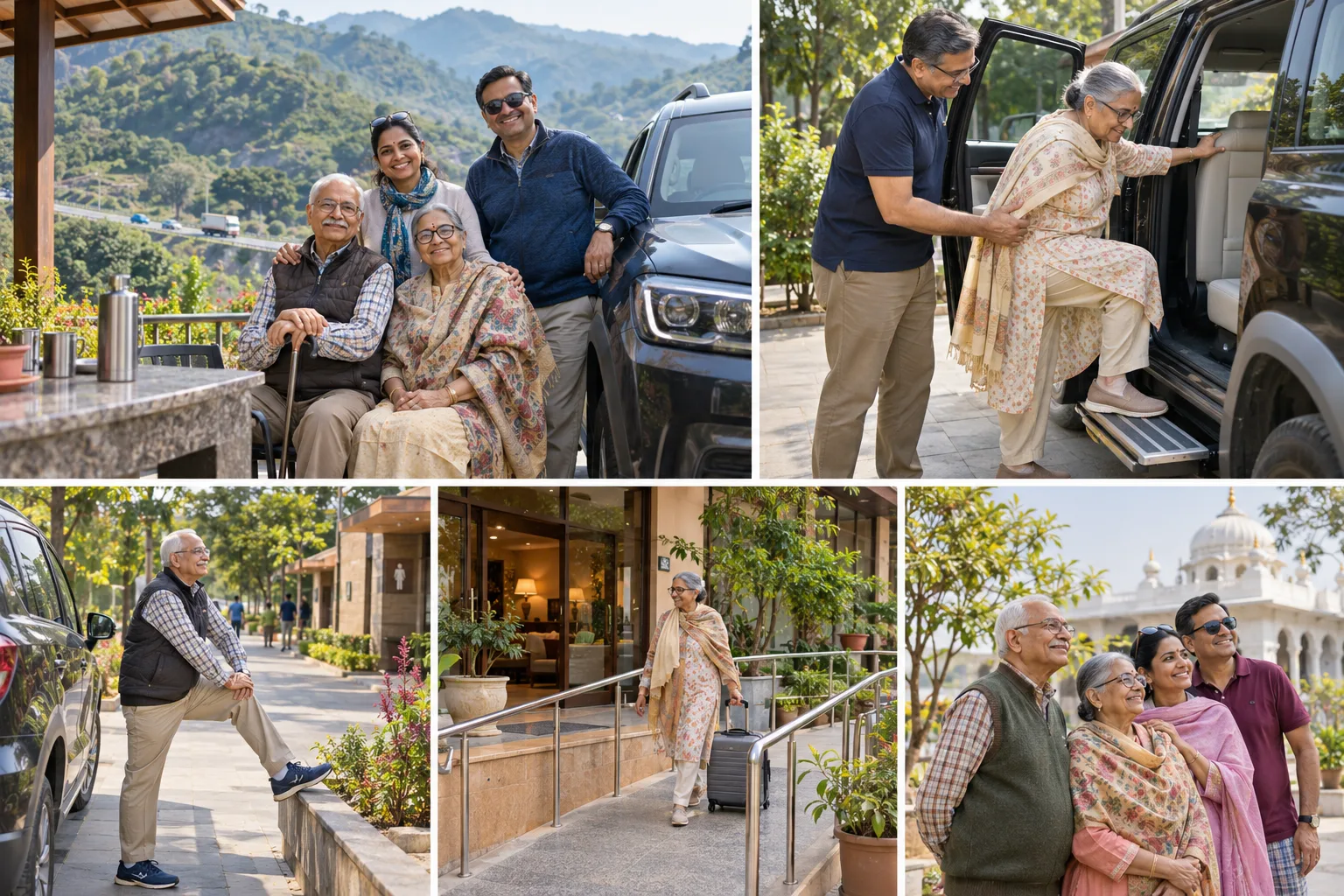
6. Book the Specific Hotel Room, Not an Assumed Accessibility Feature
A hotel may advertise a lift and still have steps between the car park and reception. A room may be on the ground floor yet have a narrow bathroom door or a shower threshold. A property may have an accessible room category, but the room assigned to your booking may not be in that category.
When calling a hotel, describe the actual requirements in practical terms: "We need step-free access from parking to the room," or "Our guest uses a walker and needs a bathroom with grab rails." Ask whether a lift is required, whether it will be working, how far the room is from reception, and whether the bathroom includes a suitable shower and toilet arrangement. If the room has to meet a particular requirement, get the confirmation in writing.
Accessibility is a recognised feature of India's government policy framework, including the national universal accessibility guidelines. However, those guidelines are not a guarantee that every hotel, homestay or listed room meets the same standard. Check each property and booking individually.
Also consider meal times, room-service availability, parking, the distance between rooms if family members want to stay nearby and whether the property can explain how it handles emergencies. An extra night in a comfortable, convenient property may be a better choice than a late arrival after an exhausting drive.
7. Take Indian Heat Warnings Seriously
Hot conditions can make even a short stop uncomfortable, particularly when parking areas are exposed to the sun or a visit involves waiting outside. Older adults and people with certain illnesses can be particularly vulnerable to heat-related illness.
India's National Centre for Disease Control recommends carrying drinking water when travelling, wearing light, loose clothing, seeking shade or cool spaces, following weather updates and planning outdoor activity for cooler parts of the day. Its guidance for older adults also notes that they may not feel thirsty in the same way and that medications or medical conditions can change fluid needs.
In practical terms, make sure the cabin is ventilated and comfortably cooled, carry suitable drinking water, choose shaded stopping places and avoid unnecessary outdoor queues during severe heat. Never leave an older passenger unattended in a hot parked car while other family members eat or shop. Check the India Meteorological Department for forecasts and official warnings before departure and again when conditions change.
Do not apply generic hydration advice to someone who has been placed on a fluid restriction. Medical conditions and some medicines can affect hydration requirements. If a person develops severe confusion, fainting, significant deterioration or symptoms suggesting heatstroke, seek emergency medical assistance promptly rather than trying to complete the day's route.
8. Be Cautious on Hill Roads and High-Altitude Journeys
A drive through the Himalayas is not interchangeable with an ordinary city-to-city journey. Road conditions can be affected by rain, landslides, snow, low visibility or temporary restrictions. Some mountain destinations also involve altitude-related medical considerations, especially for travellers with underlying conditions.
For a real Indian example, Uttarakhand's health department publishes Char Dham Yatra health advisories, including 2026 guidance. These official documents recognise the need for medical preparation and precautions for the journey. Families planning such a trip should read the current document and discuss it with a clinician if it is relevant to the traveller's health.
Avoid relying on the statement "the car goes all the way there" as proof that the entire journey is manageable. Check where passengers will actually sleep, the elevation and expected conditions, and what walking may still be required after the road ends. Investigate nearby medical facilities and do not ignore a recommendation from a clinician to avoid a demanding route.
For weather, the India Meteorological Department provides district warnings, mountain forecasts and specialised pilgrimage products. The National Disaster Management Authority's SACHET portal carries official disaster alerts and safety guidance, including information relevant to landslides and flooding. Consult these services and local traffic authorities rather than depending only on a navigation app.
If warnings, road closures or a traveller's symptoms make the planned stage unsuitable, change the itinerary. A non-refundable hotel booking is never a reason to disregard an official closure or medical concern.
9. Plan Familiar Food, Hygienic Stops and Individual Diets
Food is part of the pleasure of an Indian road trip. A relaxed breakfast, local snacks and a proper lunch can make the drive enjoyable. But it helps to plan around the older traveller's usual meals, prescribed diet and medication timing rather than assuming that everyone can wait until the next attractive restaurant appears.
For travellers with diabetes, kidney disease, swallowing difficulties, allergies or medically restricted diets, use the existing care plan and ask the treating clinician about travel-specific questions. Do not alter insulin, tablets or fluid requirements merely because a meal has been delayed. Carry appropriate snacks and drinking water where needed, especially if the next stop is uncertain.
When selecting a dhaba or restaurant, examine cleanliness, handwashing facilities, drinking water arrangements, seating and toilets. India's Food Safety and Standards Authority of India operates a voluntary Hygiene Rating Scheme for food businesses, including restaurants, cafeterias and dhabas. A participating business's rating reflects the conditions assessed on the inspection date; the absence of a rating is not proof that an establishment is unsafe, and a rating does not substitute for observing current conditions.
Do not turn food stops into a race. If a passenger needs time for medicines, rest or a slow meal, plan for it. On remote or long stretches, carrying a modest supply of familiar, suitable food can help avoid unwanted pressure to eat whatever is available.
10. Prepare Pilgrimages Around Official Requirements and Actual Access
For many families, a journey to a place of worship is the main reason for travelling. The meaning of the visit matters, but so do parking, entry procedures, queues, walking distances and opportunities to rest. A visit need not include every nearby attraction to be worthwhile.
For each pilgrimage destination, check the managing authority's current arrangements: where private vehicles must stop, whether a shuttle or assisted transport is offered, how far the actual walking route is, whether an accessible entrance exists and what arrangements apply during festivals. Do not assume that senior-citizen privileges, wheelchair services or special queues exist at every shrine. Where a service is important, confirm its availability directly.
Uttarakhand provides a concrete example of why official checks matter. Its government Tourist Care portal provides registration and verification information for the Char Dham and Hemkund Sahib Yatra, including registration letters and vehicle registration. Conditions and eligibility may change by season, so consult the live portal before booking rather than assuming that previous years' requirements still apply.
The India Meteorological Department also maintains pilgrimage weather forecasts and sector-specific information, providing an official route-specific weather resource when the service is active. These tools are useful, but neither a registration confirmation nor a weather forecast is a substitute for checking the traveller's medical suitability and the ground-level accessibility of the destination.
Build space into the day for waiting, sitting and changing plans. If one relative wants to rest while others visit an additional location, that should be an acceptable family decision.
11. Check the Car, Highway Information and Alternative Routes
Vehicle preparation matters on every road trip, but unexpected delays become more difficult when a passenger needs regular medicines, toilets or a predictable arrival time. Before departure, check the manufacturer's recommended service requirements and inspect the items relevant to your vehicle: tyres, spare tyre or repair kit, brakes, lights, wipers, fluids, fuel or charging arrangements and any required tools. Check that all doors and seat belts function properly.
The NHAI Rajmargyatra service can help with National Highway route planning, toll charges, toll-plaza information, available facilities and complaints. It is a practical Indian starting point for researching an intercity route. Remember that National Highways are not the whole road network, and a listing of facilities is not a real-time guarantee that a particular washroom, repair service or charging point will be suitable for your family.
Before driving, check route-specific warnings and prepare a sensible alternative if the primary route becomes unavailable. For electric cars, confirm charger compatibility, operating status, payment requirements and a backup charger. For petrol or diesel cars, do not plan a remote stretch assuming that the next pump will certainly be operating. Keep an offline map available for orientation, but use official alerts for rapidly changing closures and weather conditions.
Whether driving yourself or using a professional driver, protect the driver's rest and attention. An exhausted driver should not continue simply to recover time lost at a family rest stop. It is better to reach a comfortable hotel later or break the journey than to turn a delayed schedule into a road-safety problem.
12. Know India's Emergency Numbers: 112 and 1033
112 is India's national emergency response number. The Ministry of Home Affairs operates the Emergency Response Support System (ERSS), a unified platform for receiving distress reports and coordinating relevant emergency services, including police, medical and fire responses. Save 112 before travelling.
1033 is the NHAI National Highway helpline. It is a free, round-the-clock highway assistance service. It is useful for problems on National Highways, including reporting incidents and requesting highway-related help. It should not be mistaken for a universal emergency number for every local road or every medical problem.
If an incident occurs, make the call from a safe position. Give the highway number, direction of travel, nearest kilometre marker, toll plaza or other landmark, and GPS coordinates if available. Follow the dispatcher's instructions. Do not put yourself in moving traffic to take photographs or look for a road sign. Share the itinerary with a trusted person outside the car, particularly on routes where mobile coverage is uncertain.
Serious chest pain, sudden breathing difficulty, loss of consciousness, stroke-like weakness, severe heat illness or a rapidly deteriorating condition requires urgent medical assessment. The Uttarakhand Char Dham health advisories also identify symptoms such as chest pain, breathlessness, confusion or dizziness as reasons to seek medical help along a demanding pilgrimage route. Do not attempt to diagnose a medical emergency in the car or continue sightseeing while waiting for symptoms to resolve.
13. Put Essentials in a Reachable Travel Bag
Keep one small bag for items the older traveller may need during a driving day. The exact contents depend on the person, but could include regularly prescribed medicines, a written medication list, glasses, tissues, a phone and charging cable, suitable drinking water and snacks, weather-appropriate clothing and any necessary mobility equipment. Store medication according to the directions on the packaging or the prescriber's instructions; a hot vehicle boot can be unsuitable for some products.
Keep medical documents and emergency contacts accessible to at least one accompanying person. If a traveller uses devices that require charging, testing supplies or specialist consumables, make sure those are packed. Do not substitute unfamiliar over-the-counter medication for the person's established treatment plan.
Pack the car so that luggage does not obstruct an exit or seat belt. Roadside repair equipment should be located where an adult can reach it safely when the car is parked. A charger or power bank is useful, but it does not guarantee reception in a remote valley; make the route and emergency arrangements known to the family before leaving.
There is no need for a large generic medical kit if it cannot be used competently. Carry appropriate first-aid supplies and whatever specific equipment the traveller's healthcare team has recommended. The goal is preparedness, not independent medical treatment.
14. Use a Flexible Daily Schedule, Not a Rigid Timetable
A family road trip benefits from a simple sequence rather than a minute-by-minute plan. Begin by checking how everyone feels, taking medicines according to their usual instructions and looking at the day's official weather and road information. Make sure every occupant is seated and properly belted before the vehicle moves.
Drive to a safe planned stopping place, with the freedom to stop earlier if needed. At the break, allow time for the washroom, food or drink and movement appropriate to the traveller. Ask the person travelling whether the next stage still feels manageable. Do not make them choose between remaining comfortable and disappointing the rest of the family.
Around the middle of the day, reconsider the remaining distance against traffic, heat, fatigue and hotel arrival. If the next stretch is unfamiliar or remote, verify the backup plan. Once at the accommodation, prioritise checking in, resting and eating. A separate sightseeing outing should be optional.
This approach cannot promise an effortless journey, but it gives the family a way to respond to real circumstances. It also leaves space for the enjoyable, unexpected stops that make a road trip memorable.
15. Recognise When the Sensible Choice Is to Stop or Turn Back
Not every road trip should continue as originally booked. Dangerous weather, an impassable route, an unsuitable hotel room, driver fatigue or a significant health concern may justify changing the destination, staying overnight or returning home. The correct response depends on the situation, but maintaining the original schedule should never become the only priority.
Listen when an older passenger says they are uncomfortable or exhausted. Do not interpret reluctance to climb stairs or join an extra outing as a lack of enthusiasm for the family trip. Their preferences can change as the day progresses. In the same way, if medical advice says to avoid a particular altitude, exertion or journey, do not override that recommendation because a vehicle can technically reach the destination.
Before a mountain or monsoon journey, use the NDMA SACHET portal for government disaster alerts and official safety instructions, and the India Meteorological Department for forecasts and warnings. A navigation app's apparent road connection cannot be treated as proof that a route is open or safe.
If a change of plans is needed, tell everyone clearly and agree on a practical alternative. The purpose of travelling together is not to complete the largest number of kilometres; it is to enjoy the journey without unnecessary risk or pressure.
16. Checklist: What to Verify Before Departure
Use this as a planning checklist, not a medical prescription. Some items will not apply to every traveller.
Traveller's wishes: Have the older family members agreed to the destination, pace and planned activities?
Health requirements: Have relevant medical questions been discussed with the treating clinician? Are prescribed medicines, records and emergency contacts ready?
Seat and vehicle: Can every occupant enter, sit, buckle up and exit safely? Is mobility equipment secured appropriately?
Driving plan: Are there suitable rest stops, reliable toilet options, fuel or charging plans and an acceptable overnight stop?
Accessible accommodation: Has the hotel confirmed the specific booked room, bathroom and route from the car park?
Weather and conditions: Have you checked IMD warnings, NDMA alerts and any local route restrictions?
Meals: Are dietary requirements, appropriate drinking water and realistic meal timings planned?
Pilgrimage rules: Have you confirmed the site's current registration, eligibility, parking, walking and assistance arrangements where relevant?
Vehicle readiness: Are tyres, brakes, lights, service items, documents and roadside equipment checked?
Emergency plan: Do relevant family members know 112 and the 1033 National Highway helpline, and can they describe the route or location if assistance is required?
A Journey Worth Remembering Is One Everyone Can Enjoy
A successful family road trip is not measured by how many kilometres are driven in a day, how expensive the car is or how many destinations are visited. It is measured in part by whether everyone feels included, respected and able to enjoy the experience.
For Indian families travelling with parents or grandparents, that means planning beyond the route map. Choose a vehicle that suits the actual passenger. Check medicines and mobility needs. Confirm the room and toilet rather than assuming they will be accessible. Follow government weather warnings, know the emergency services and make room for comfortable breaks. If the journey is a pilgrimage, check the relevant state and shrine authorities before setting out.
The most valuable result may be a conversation in the car, a relaxed family meal or an unhurried visit to a meaningful place. Thoughtful planning helps make room for those moments.
Sources and Verification
- Directorate General of Health Services (DGHS), Ministry of Health and Family Welfare – National Programme for Health C
- National Health Mission (NHM) – National Programme for Health Care of the Elderly
- Uttarakhand Department of Medical Health and Family Welfare – Char Dham Yatra Health Advisories
- Ministry of Road Transport and Highways – Motor Vehicles (Driving) Regulations, 2017
- Government of India – Motor Vehicles Act, 1988 (Section 194B)
- National Highways Authority of India (NHAI) – Rajmargyatra Highway Services
- Department of Empowerment of Persons with Disabilities – Harmonised Guidelines and Standards for Universal Accessibili
- National Centre for Disease Control (NCDC) – Heat-Related Public Health Advisory
- National Centre for Disease Control (NCDC) – Training Manual for Community Members: Recognising and Preventing Heat-Re
- India Meteorological Department (IMD) – Official Weather Forecasts and Warnings
- National Disaster Management Authority (NDMA) – SACHET Disaster Alert Portal
- Food Safety and Standards Authority of India (FSSAI) – Hygiene Rating Scheme
- Uttarakhand Tourism – Tourist Care and Char Dham Yatra Registration Portal
- India Meteorological Department (IMD) – Pilgrimage Sector Weather Forecasts
- Ministry of Home Affairs (MHA) – Emergency Response Support System (112)
- National Disaster Management Authority (NDMA) – SACHET Disaster Safety Guidelines (Do's and Don'ts)
Continue exploring
Related guides, articles, and videos
These recommendations are matched to this Blog using its destinations, routes, vehicles, and practical travel topics.
Recommended travel guide
Family Travel Tips
Simple family-focused advice for safer, calmer, and more enjoyable trips with kids, luggage, snacks, comfort breaks, and flexible planning.
Open this topic guideRelated reading