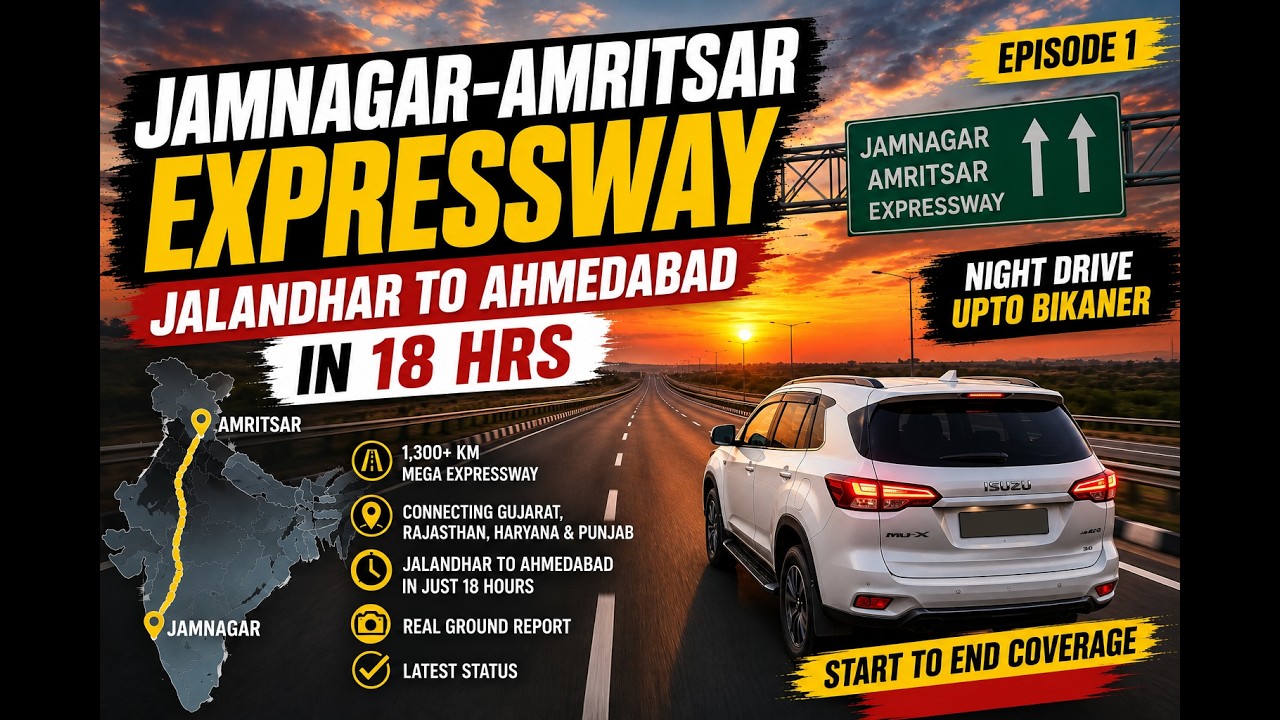

Embarking on an ambitious journey, the Ghulatis On The Go family undertook a significant road trip from Jodhpur, Rajasthan, to Jalandhar, Punjab. This extensive drive, covering a substantial portion of India's evolving highway network, offered insights into new infrastructure, diverse landscapes, and the practicalities of long-distance travel. The trip, which spanned approximately 17.5 hours of driving time, provided a firsthand look at the Amritsar–Jamnagar Expressway and other key routes, showcasing the transformation of inter-state connectivity.
The journey commenced from Jodhpur, following an overnight stay at the Umaid Palace. The family departed around 10:30 AM, heading towards the Amritsar–Jamnagar Expressway via Osian. Their route was meticulously planned to utilize the newly developed expressways, aiming for an efficient and comfortable drive towards their final destination in Jalandhar. This segment of the trip highlighted the unique geological features of Rajasthan, including extensive red stone quarries, before transitioning into the modern infrastructure of the expressway.
Departure from Jodhpur and the Red Stone Quarries
The morning began with the family checking out of the Umaid Palace in Jodhpur. The initial leg of the journey, starting around 10:30 AM, led them out of Jodhpur towards Osian. Immediately upon leaving the city, the landscape transformed, revealing vast red stone quarries. These quarries, including the prominent Soor Sagar and Fidusar mines, have been active for approximately 1,500 years, showcasing a long history of mining in the region. The deep excavations and piles of red stone blocks created a unique, rugged scenery along the roadside. The strong winds in the area, a common feature of this arid landscape, added to the distinct atmosphere of this industrial yet natural environment.
Transition to the Amritsar–Jamnagar Expressway
Continuing their drive, the family navigated through local roads, passing a toll barrier that was not yet operational, allowing for free passage. The route then led them towards a junction where the road diverged for Jaipur and Nagaur. The family proceeded straight, indicating their intention to bypass these cities and connect directly to the Amritsar–Jamnagar Expressway. This strategic choice underscored the efficiency of the new highway network, designed to streamline travel between major regions. The road conditions were noted to be excellent, even in the interior parts of Rajasthan, a testament to recent infrastructure developments.
Osian: Desert Safari and Local Life
The journey included a brief passage through Osian, a village known for its desert safari experiences. Although the family did not participate in a safari on this occasion, they observed the local setup, including railway tracks and parked jeeps ready for desert excursions. Osian offers a desert experience similar to Jaisalmer, providing an alternative for travelers interested in dune safaris. The main market of Osian, bustling with local activity and various shops, was also crossed, offering a glimpse into the daily life of the region before rejoining the main highway. The proximity of the Amritsar–Jamnagar Expressway to Osian makes it an accessible stop for travelers.
The Amritsar–Jamnagar Expressway Experience
Reaching the Amritsar–Jamnagar Expressway around 11:30 AM marked a significant point in the journey. This six-lane expressway, part of the Bharatmala Pariyojana, is designed for high-speed travel, with a speed limit of 110 km/h. The expressway is characterized by its long, straight stretches and minimal traffic, primarily consisting of trucks. The family noted the scarcity of rest plazas and food hubs along this section, with only a few fuel stations available, mainly near Bikaner. This highlights the expressway's primary function as a freight corridor, prioritizing efficient movement of goods. Despite the limited amenities, the smooth road surface and clear signage contributed to a comfortable driving experience.
Progress Towards Bathinda and Jalandhar
As the day progressed, the landscape along the expressway gradually shifted from the arid desert of Rajasthan to areas with increasing greenery, signaling their approach towards Punjab. The journey involved crossing several bridges and underpasses, showcasing the modern engineering of the highway. By 1:00 PM, the family had covered a significant distance, with Bathinda approximately 306 kilometers away. The expressway continued to offer excellent driving conditions, allowing for consistent speeds. The presence of speed cameras along the route reinforced the importance of adhering to speed limits for safety.
Arrival in Bathinda and the Final Stretch
The family reached Bathinda around 3:40 PM, marking the end of their expressway journey. After a much-needed one-hour break at a food court in Bathinda, where they enjoyed snacks and refreshments, they resumed their drive towards Jalandhar. This break provided an opportunity to recharge before tackling the final leg of the trip. The route from Bathinda involved navigating through local roads and eventually merging onto another highway leading to Moga. The drive through Moga, a city in Punjab, presented typical urban traffic, but the family successfully bypassed the main city area by taking a left turn towards Nakodar and Jalandhar.
Crossing the Sutlej River and Night Drive to Jalandhar
The journey from Moga towards Jalandhar included crossing the Sutlej River, a significant landmark. By this time, dusk had settled, and the drive continued under streetlights. The road conditions remained good, allowing for steady progress. The family passed through Shakot and eventually reached the outskirts of Jalandhar by 8:00 PM. The entire journey from Ahmedabad to Jalandhar, including the Jodhpur to Jalandhar segment, took approximately 17.5 hours of driving time, a testament to the efficiency of the new expressways and highways.
Practical Takeaways for Travelers
This extensive road trip offers several practical lessons for those planning similar long-distance drives in India. The Amritsar–Jamnagar Expressway provides an excellent, smooth driving experience, but travelers should be prepared for limited food and fuel stops, especially in its initial stretches. Planning breaks and fuel stops in advance is crucial. The road conditions in Rajasthan's interiors are surprisingly good, making for comfortable travel. Utilizing bypasses around cities like Moga can save significant time and avoid urban traffic congestion. Adhering to speed limits is important due to the presence of speed cameras. The journey highlights the evolving infrastructure in India, making long-distance road trips more feasible and enjoyable.
Watch the Original Journey
This article is connected to the original Ghulatis On The Go video below. Watch it for the complete visual experience and conversations from the road.
Key moments from the video
Continue exploring
Related guides, articles, and videos
These recommendations are matched to this Journey Article using its locations, routes, vehicles, categories, and practical travel topics.
Recommended travel guide
India Highway & Expressway Guides
Helpful notes on expressways, national highways, road conditions, rest breaks, toll planning, and safe long-distance driving.
Open this topic guideRelated reading