

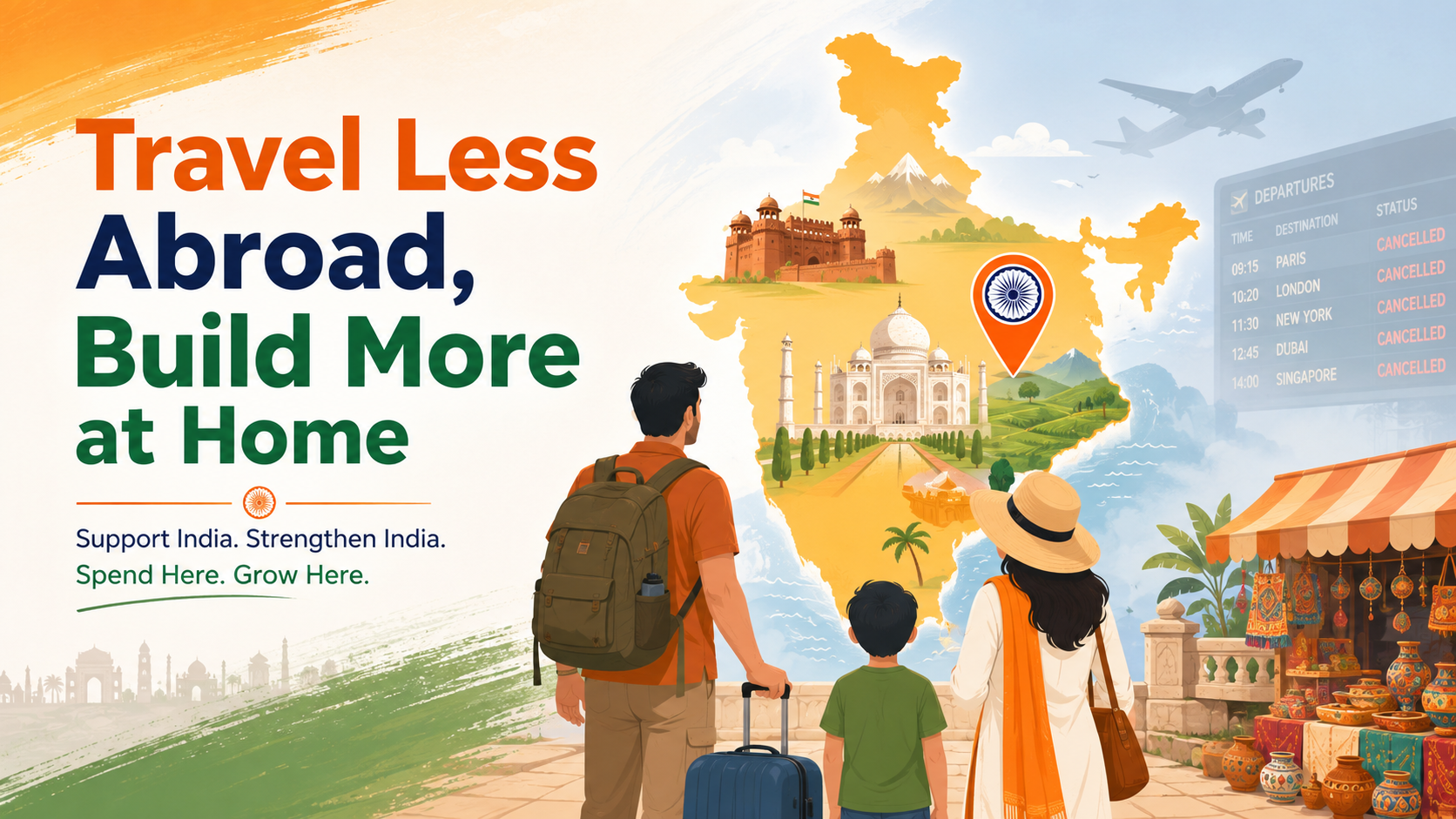
Prime Minister Narendra Modi’s recent appeal to Indian citizens created a lot of discussion, especially around one point: his request that Indians postpone non-essential foreign travel for at least a year. Some people heard it as a restriction. Others saw it as a patriotic suggestion. Based on the facts, it was not a travel ban. It was an appeal for citizens to think carefully about where their money goes during a time of global uncertainty.
Speaking in Hyderabad, PM Modi asked citizens to reduce fuel consumption, use public transport and carpooling where possible, increase the use of electric vehicles, revive work-from-home and online meetings when practical, avoid non-essential foreign travel, avoid gold purchases for a year, and prioritize local goods. His stated reason was to reduce pressure on petroleum use and conserve India’s foreign exchange reserves during the global crisis.
To me, this was a good idea because the message was not simply “do not travel.” The message was bigger than that. It was about economic responsibility. When a country faces pressure from rising fuel costs, international conflict, supply disruptions, and foreign exchange outflows, everyday choices start to matter. A vacation, a destination wedding, a luxury purchase, or a fuel-heavy lifestyle may feel personal, but multiplied across millions of people, those choices can affect the national economy.
One important point is that foreign travel uses foreign currency. When Indian citizens travel abroad for vacations, weddings, hotels, shopping, entertainment, and local transportation, a portion of that spending leaves India. That does not mean foreign travel is wrong. Travel opens minds, connects cultures, and supports global relationships. But during a crisis, postponing non-essential overseas travel can help reduce foreign currency outflow. PM Modi specifically connected overseas weddings, vacations, and travel abroad with the need to conserve foreign exchange.
This matters even more because the appeal came during a period of pressure from global energy markets and the West Asia crisis. Reports noted that PM Modi’s message was tied to concerns over rising global fuel prices, crude oil pressures, and the need to limit India’s import burden. Reuters reported that the travel industry was already seeing overseas inquiries down by 10% to 15% for the summer season, with pressure building around inflation, higher airfares, and fuel costs.
Another reason I think the idea was good is that it encourages Indians to rediscover India. India has mountains, beaches, forests, deserts, temples, heritage cities, food trails, wildlife, spiritual destinations, and cultural experiences that rival many international vacations. Choosing domestic tourism keeps more money inside the country. It supports hotels, drivers, restaurants, guides, small shops, local artists, airlines, railways, and families who depend on tourism.
That does not mean every Indian must cancel every trip abroad. Emergencies, family obligations, education, business, medical reasons, and important personal matters are different from non-essential tourism. The key word here is “non-essential.” PM Modi’s appeal was about delaying travel that can wait, especially vacations and foreign destination weddings. That distinction is important because it keeps the message practical rather than extreme.
I also think the appeal was good because it reminded citizens that patriotism is not only shown in big moments. Sometimes patriotism is shown through small daily choices: using public transport, buying Indian-made products, avoiding unnecessary imports, saving fuel, reducing waste, and supporting local businesses. PM Modi framed responsible living as a national duty during difficult times, saying people should make choices that strengthen the nation economically.
There is also a practical household benefit. If global fuel prices rise, travel becomes more expensive. International airfares, hotel costs, local transport, and currency exchange rates can all make foreign vacations costlier. Waiting for a more stable time can protect families from overspending. A domestic vacation may be more affordable, easier to plan, and still deeply meaningful.
The gold purchase point also connects with the same idea. India has a strong cultural connection with gold, especially during weddings and festivals. But gold imports require foreign exchange. PM Modi asked families to avoid non-essential gold purchases for one year, saying that gold purchases put pressure on foreign exchange reserves. Again, this was not about rejecting tradition forever. It was about timing and restraint during a difficult global moment.
Of course, the travel and hospitality industry has valid concerns. Outbound travel companies, airlines, travel agents, wedding planners, and international tourism businesses can be affected when people delay trips. Reuters reported that the industry expected pressure after PM Modi’s appeal, especially during the peak outbound travel season. That concern is real and should not be ignored.
But the other side of that challenge is opportunity. If even a portion of foreign vacation spending shifts to domestic tourism, Indian hotels, restaurants, transportation providers, local guides, artisans, and regional destinations can benefit. This could also push India to improve tourist infrastructure, cleanliness, safety, service quality, accessibility, and hospitality standards. A stronger domestic tourism culture can create jobs and pride at the same time.
What I appreciate most about the appeal is that it trusts citizens to participate voluntarily. PM Modi later clarified that the government was not planning curbs on foreign travel and dismissed claims of a travel tax, cess, or surcharge as false. That clarification matters because there is a big difference between a government ban and a national appeal.
In my opinion, PM Modi’s request was a good idea because it was reasonable, timely, and rooted in economic common sense. It asked citizens to think beyond personal convenience and consider the bigger picture. If India is facing pressure from global fuel costs, foreign exchange outflows, and international uncertainty, then reducing unnecessary foreign spending for a limited period is not a punishment. It is a practical contribution.
Travel abroad will always have value. But there are moments when staying closer to home can be just as powerful. Spending in India supports Indian workers. Visiting Indian destinations strengthens Indian tourism. Buying local products supports Indian businesses. Saving fuel reduces pressure on imports. These may seem like small actions, but when millions of people participate, small actions can become a national force.
So yes, I believe PM Modi’s appeal was a good idea. Not because people should stop seeing the world forever, but because timing matters. During a crisis, a responsible pause can help the country. And in that pause, many Indians may discover something beautiful: some of the world’s richest experiences are already waiting for them at home.